Does herbal tea have caffeine?
Herbal tea is what people drink when they want no caffeine at all, and mostly they get it. But the official zero is thinner than you would guess, a few boxes in the herbal aisle have tea leaf in them, and a sleep tea has turned up with caffeine in a lab. Here is every number, with the page it came from.
The short answer
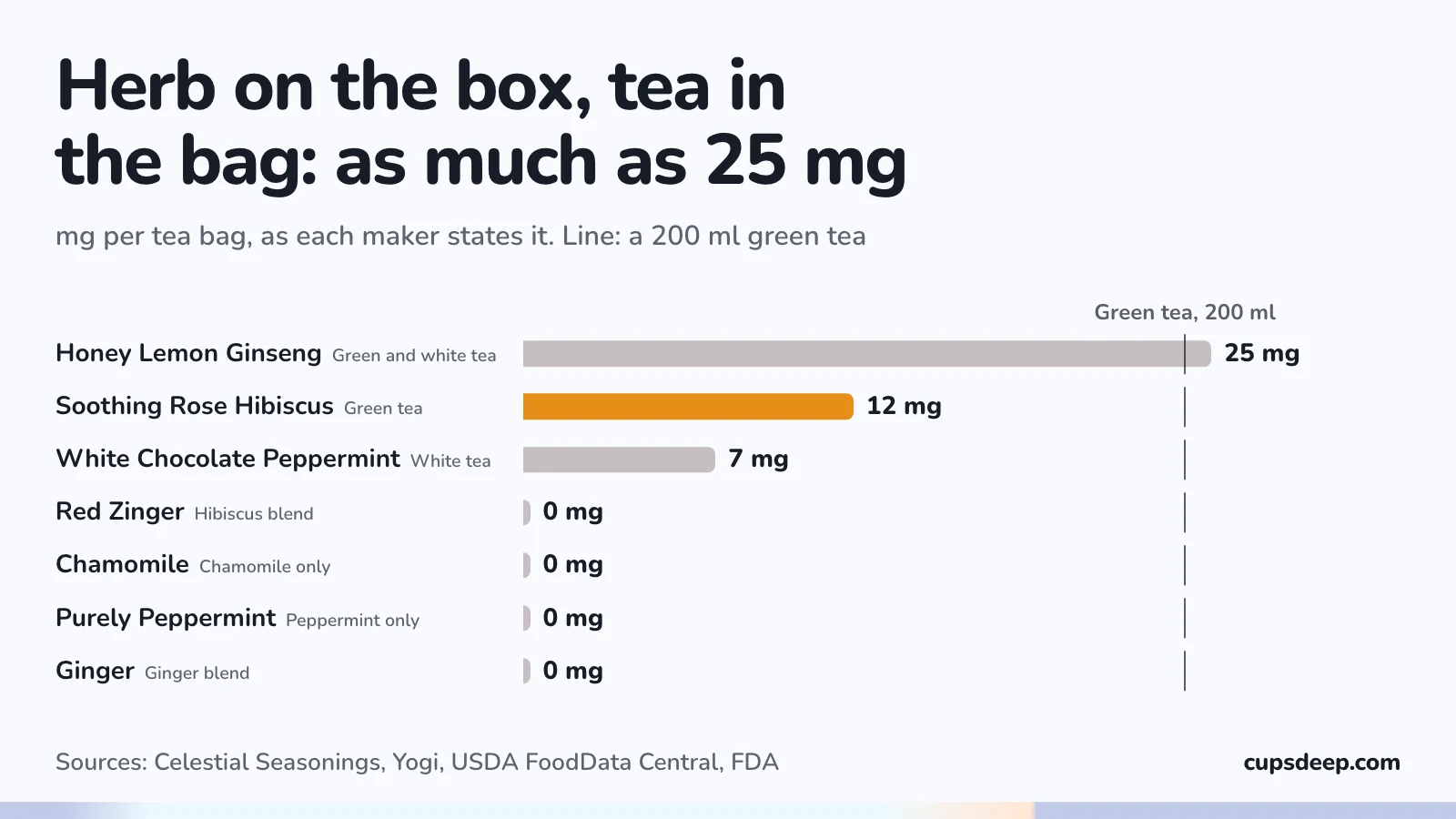
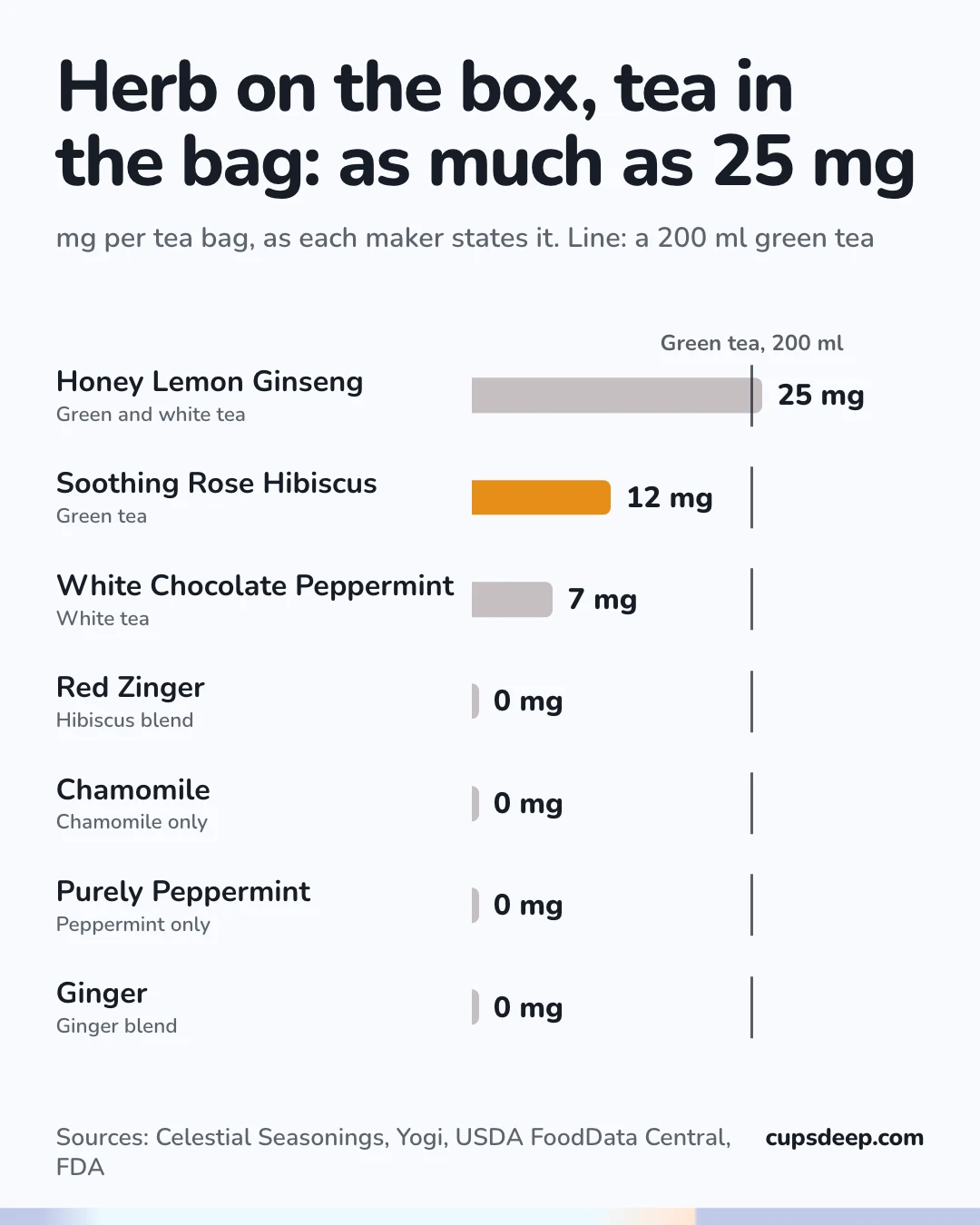
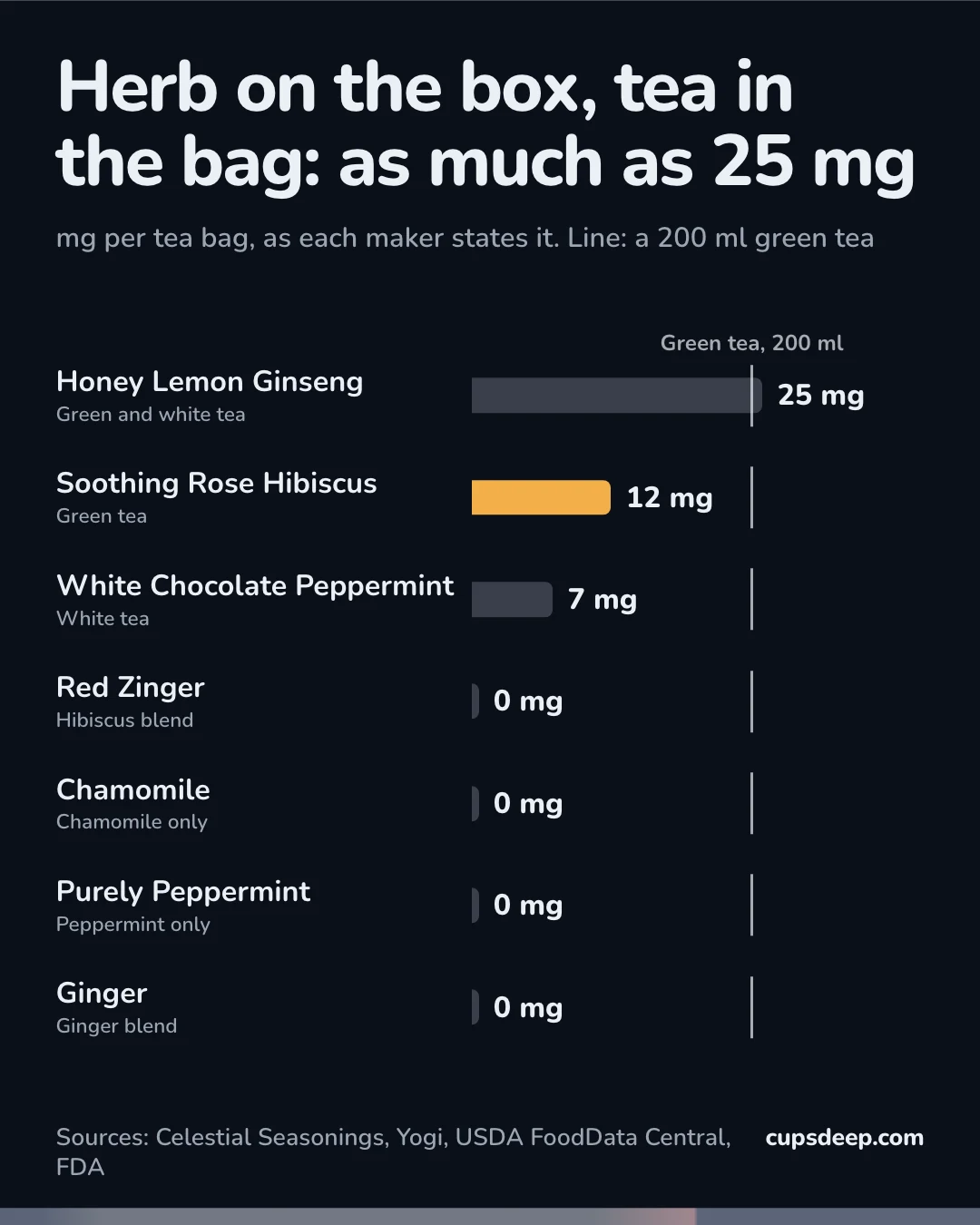
Mostly no. Chamomile, peppermint, hibiscus, rooibos and ginger are not the tea plant, USDA lists brewed chamomile and other herbal teas at 0 mg per 100 g, and every plain herbal tea we checked carries its maker’s zero. The catch is the box: some teas sold under herbal names contain tea leaf, like Yogi’s Soothing Rose Hibiscus at 12 mg and Celestial’s Honey Lemon Ginseng at 25 mg.

Does chamomile tea have caffeine?
No, by every source we read. Chamomile is a flower, not the tea plant that black, green and white tea come from. USDA lists brewed chamomile at 0 mg per 100 g. Celestial Seasonings’ Chamomile reads 0 mg, Yogi labels its Comforting Chamomile caffeine free, and Bigelow says its herbal teas have 0 mg per 8 oz cup. A 2008 lab study of brewed commercial teas found no caffeine in the herbal ones.
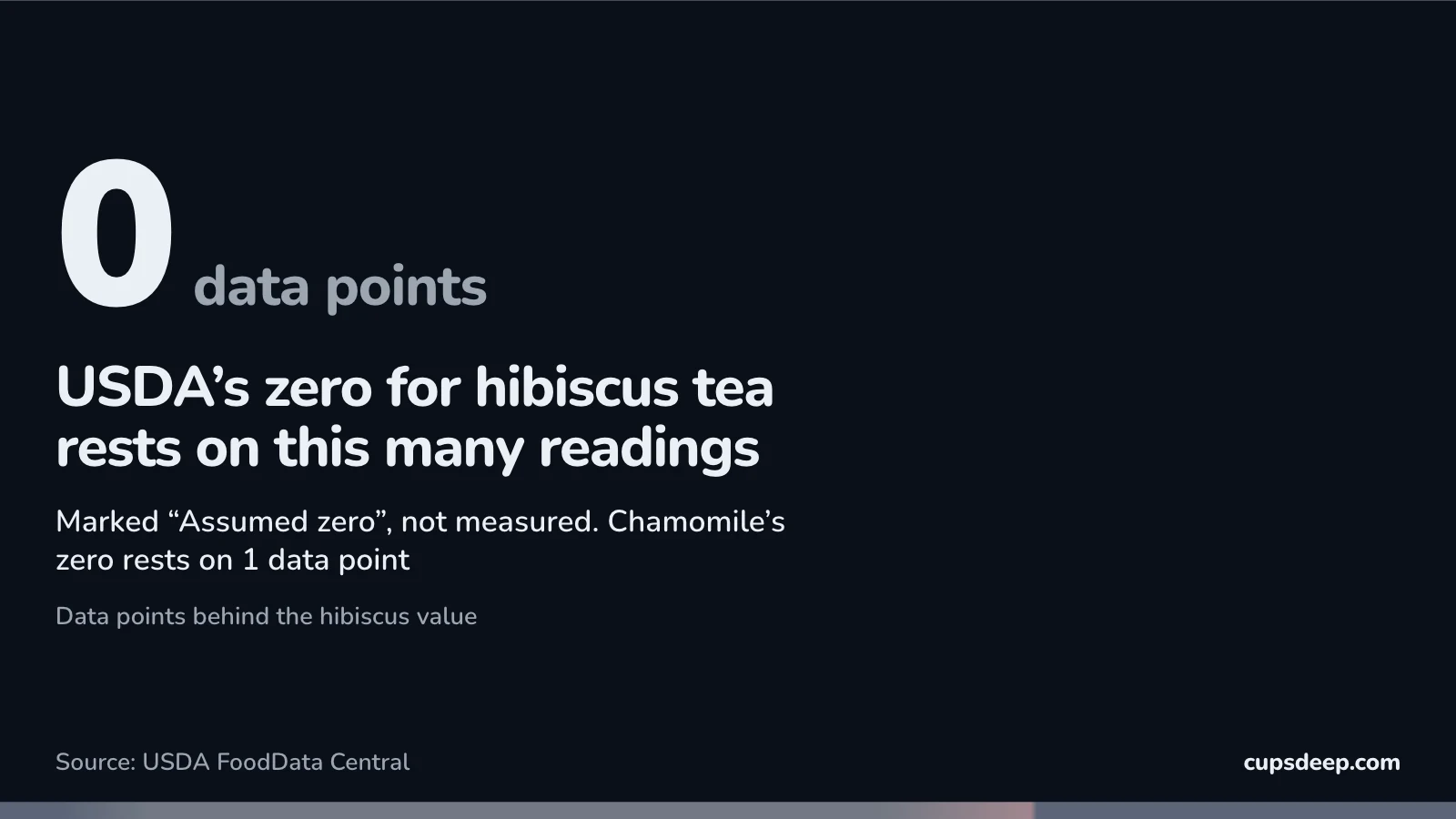
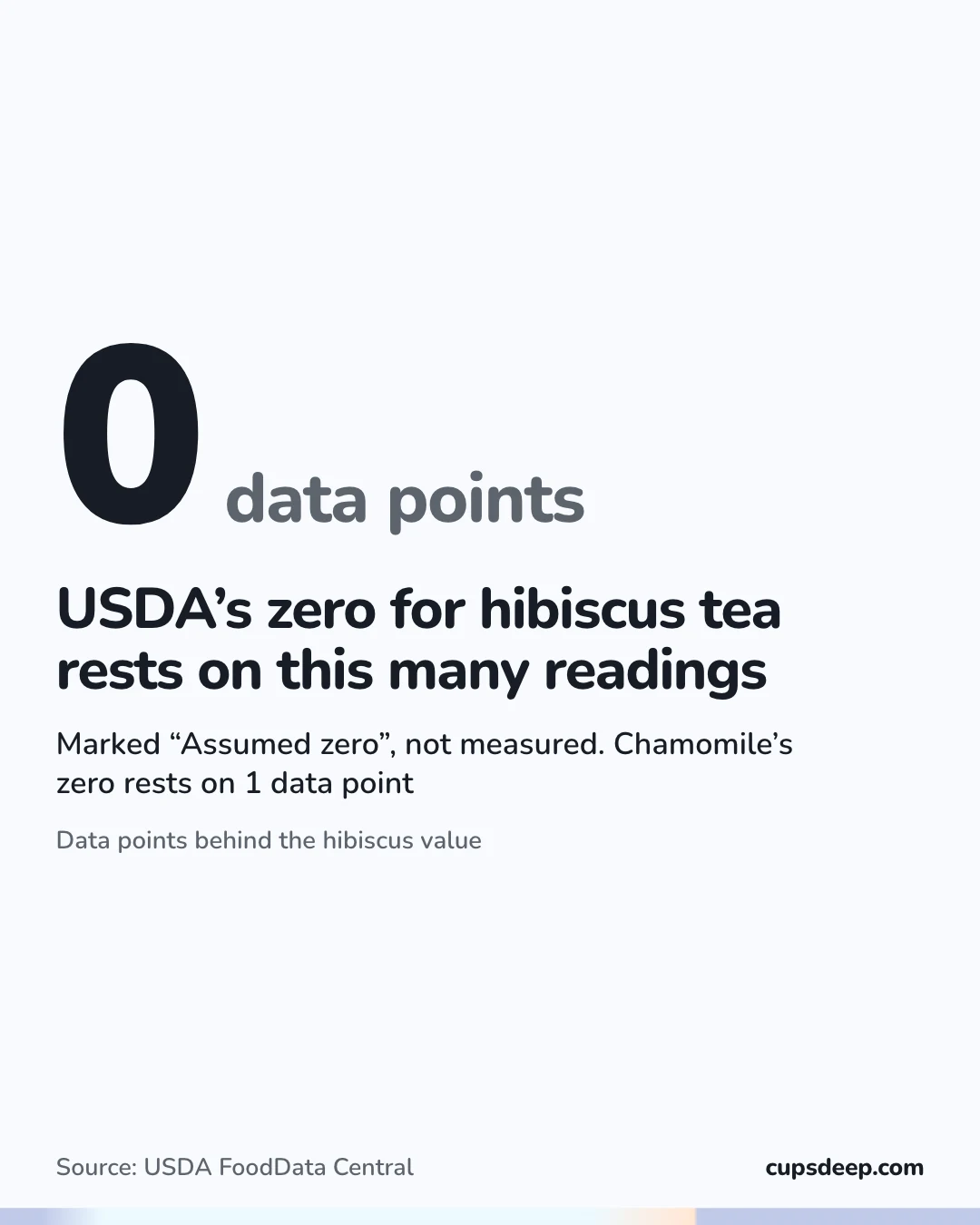
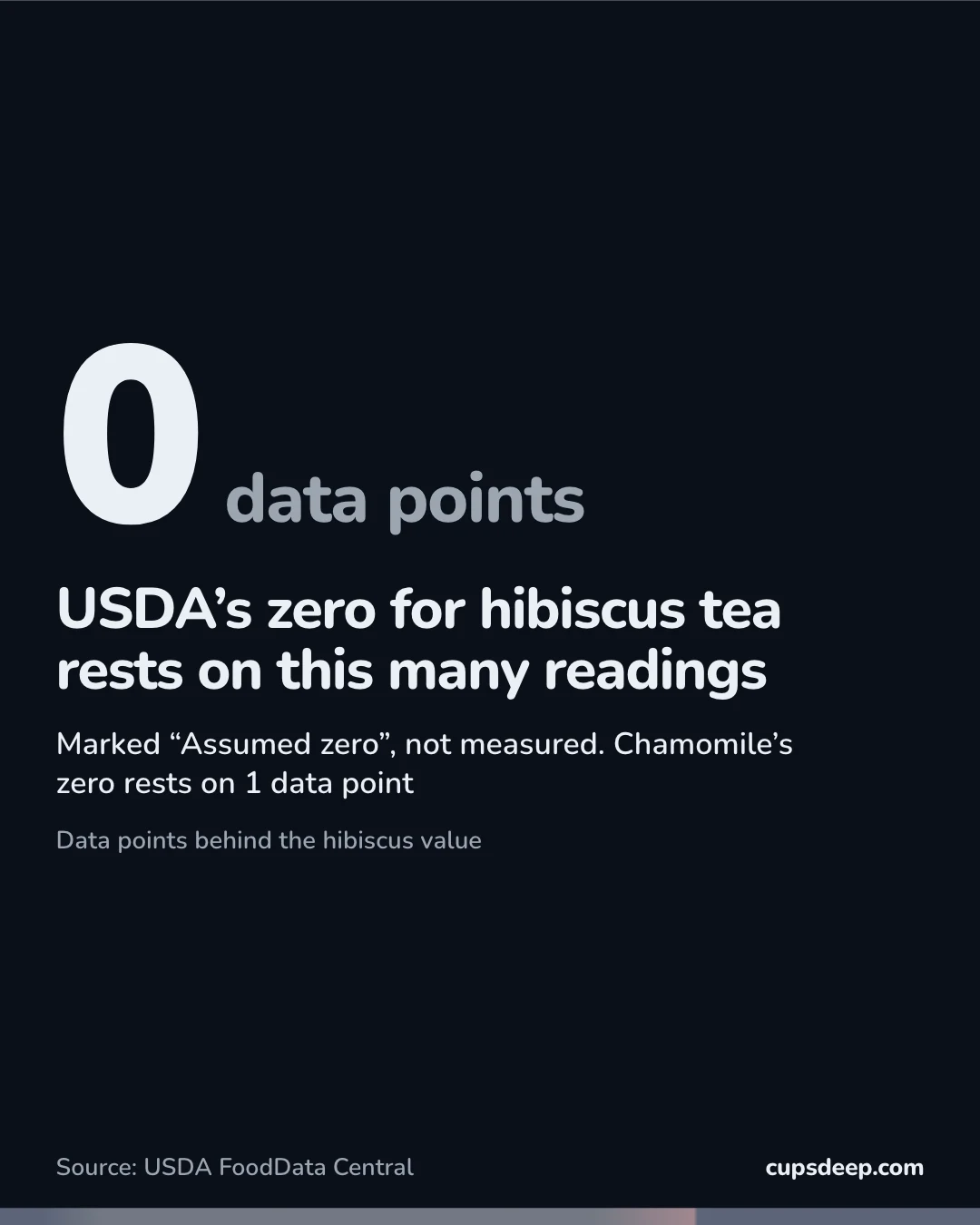
USDA's reference table (SR Legacy) lists brewed chamomile tea and brewed herbal tea other than chamomile at 0 mg of caffeine per 100 g. Each zero rests on 1 data point, and both nutrient values were last updated on 5/1/1986. Brewed hibiscus tea is also listed at 0 mg per 100 g, but marked “Assumed zero”, with 0 data points: an assumption, not a measurement. 479480481
Now look at what holds the government’s zero up. Chamomile’s rests on 1 data point, and the value was last updated on May 1, 1986. Herbal tea other than chamomile is the same, 1 data point, same date. Hibiscus has 0 data points: USDA marks it “Assumed zero”, which is a polite way of saying nobody measured.
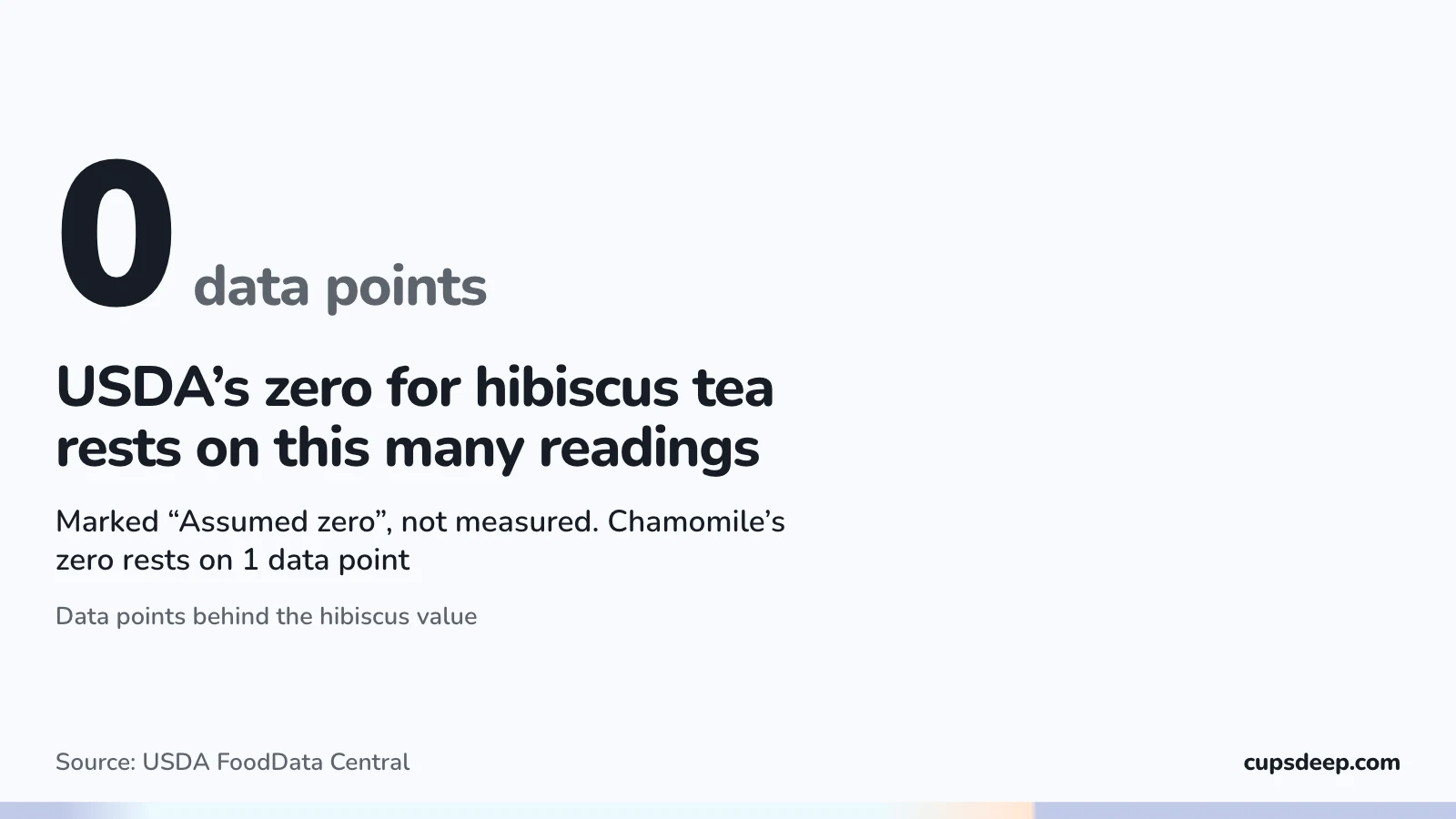
None of that is a reason to think chamomile has caffeine. Nothing we read suggests the plant makes any, and the makers’ figures agree. It is a reason to know that the official zero rests on one data point, from a long time ago, and nobody has needed to add another.
The official zero for chamomile tea rests on one data point, last updated the year Top Gun came out
| Tea | Who says so | Caffeine | What the zero is |
|---|---|---|---|
| Chamomile, brewed | USDA | 0 mg per 100 g | One data point, 1986; USDA gives no derivation code |
| Herbal tea other than chamomile | USDA | 0 mg per 100 g | One data point, 1986; USDA gives no derivation code |
| Hibiscus, brewed | USDA | 0 mg per 100 g | Assumed, not measured |
| Ginger tea | USDA survey table | 0 mg per 100 g | Calculated from water and raw ginger, itself an assumed zero |
| Chamomile | Celestial Seasonings | 0 mg | Maker’s Caffeine Meter |
| Comforting Chamomile | Yogi | 0 mg | Labeled “Caffeine Free” |
| Peppermint | Celestial Seasonings | 0 mg | Maker’s Caffeine Meter |
| Purely Peppermint | Yogi | 0 mg | Labeled “Caffeine Free” |
| Red Zinger, a hibiscus blend | Celestial Seasonings | 0 mg | Maker’s Caffeine Meter |
| Jammin’ Lemon Ginger | Celestial Seasonings | 0 mg | Maker’s Caffeine Meter |
| Ginger | Yogi | 0 mg | Labeled “Caffeine Free” |
| Chai Rooibos | Yogi | 0 mg | Labeled caffeine free |
| Herbal teas, per 8 oz cup | Bigelow | 0 mg | Maker’s figure for the range |
USDA’s figures are per hundred grams of brewed tea, which for a zero changes nothing. Yogi’s and Celestial’s pages print no serving beside their figures; Bigelow’s is per 8 oz cup. Every page was read on November 12, 2026, except Yogi’s Chai Rooibos, read on November 10, and Bigelow’s, read on November 11. A maker’s zero is its own figure or its own words, not a lab result.
Do hibiscus, peppermint, rooibos and ginger tea have caffeine?
Plain, no. Under a brand name, read the ingredients. Herb by herb:
- Hibiscus. Celestial’s Red Zinger, a hibiscus blend, reads 0 mg, and USDA lists brewed hibiscus at 0 mg per 100 g, assumed. Starbucks’ Passion Tango is hibiscus too, and the Starbucks article has its menu figure. Watch the name, though: Yogi’s Soothing Rose Hibiscus is built on green tea and states 12 mg, and Yerba Madre sells a Strawberry Hibiscus yerba mate that it says has about as much caffeine as a shot of espresso.
- Peppermint. Celestial Peppermint and Yogi Purely Peppermint are each one herb. Celestial’s reads 0 mg, and Yogi labels its own caffeine free. USDA has no peppermint tea of its own; we searched. Celestial’s White Chocolate Peppermint is white tea with peppermint in it and states 7 mg.
- Rooibos. A review in the research literature calls rooibos a caffeine-free tea, and Yogi labels its Chai Rooibos caffeine free. But rooibos on the list does not make the box safe: Yogi’s Vanilla Spice Perfect Energy has rooibos next to black and green tea, and states 75 mg.
- Ginger. Celestial’s Jammin’ Lemon Ginger reads 0 mg, and Yogi labels its Ginger caffeine free. USDA’s ginger tea is a zero too, but a calculated one, and USDA’s own figure for raw ginger is an assumed zero.
USDA's survey food “Tea, ginger” lists 0 mg of caffeine per 100 g. It is a recipe of 99 g of tap water and 1 g of raw ginger root, so the value is calculated from its ingredients, not measured in a cup, and USDA's own figure for raw ginger is an assumed zero. FoodData Central has no peppermint tea. Rooibos appears only as another name for the survey food “Tea, hot, herbal”, which takes its 0 mg from the brewed herbal tea record, and that survey food also lists mate tea among its names. 482483
The rule that works: the name on the front of the box is marketing, the ingredient list is the drink. If it names tea of any kind (green, black, white, oolong, puerh, hojicha, matcha) or yerba mate, there is caffeine in the cup. Starbucks’ own menu has a chamomile tea that turns out to be a green tea blend, and the Starbucks article has that number too.
Which herbal teas have caffeine?
Two kinds: blends that add real tea, and herbs that bring caffeine of their own. The first kind is the trap, because the box leads with the herb.
| Tea | Maker | What is in it | Caffeine |
|---|---|---|---|
| Vanilla Spice Perfect Energy | Yogi | Black and green tea, rooibos | 75 mg |
| Honey Lemon Ginseng | Celestial Seasonings | Green and white tea | 25 mg |
| S’mores | Yogi | Hojicha and puerh tea | 20 mg |
| Soothing Rose Hibiscus | Yogi | Green tea | 12 mg |
| Pure Green Decaf | Yogi | Decaf green tea | 10 mg |
| White Chocolate Peppermint | Celestial Seasonings | White tea | 7 mg |
| Mate Bags, one bag | Yerba Madre | Yerba mate | About 30 mg |
| Enlighten Mint, 15.5 fl oz can | Yerba Madre | Yerba mate, added caffeine | 150 mg |
Each maker’s US page, read on November 12, 2026. Yogi prints no serving beside its figure but tells you to steep one tea bag, so read it as per bag. Celestial’s meter names no serving, but the page says to steep one bag in a cup of water. Yerba Madre states its own. What is in it comes from each product’s ingredients.
Yogi’s S’mores is the one that would fool me: a dessert name on a box that is hojicha and puerh, both of them tea. Celestial’s Honey Lemon Ginseng at least says green tea in its full name.
Then the herb that brings its own. Yerba mate is drunk like an herbal tea and has real caffeine: BraCaffT, a Brazilian food table, puts a gourd of hot mate at 91 mg and of cold tereré at 84 mg, for 350 ml. USDA’s survey table even lists mate tea as another name for its herbal tea, at 0 mg per 100 g, a zero that does not fit the gourd. Yerba Madre, sold by Guayakí, says one of its mate bags has about 30 mg. The gourd, refilled all afternoon, is in how much caffeine is in yerba mate.
Yerba Madre, sold by Guayakí, says each of its mate bags contains about 30 mg of caffeine, and that a 15.5 fl oz can of its Enlighten Mint delivers 150 mg; that can lists organic caffeine among its ingredients, so not all of it comes from the mate. Its Strawberry Hibiscus brewed yerba mate is described as having “about as much caffeine as a shot of espresso”, with no figure. 503504505
Enlighten Mint is the one to read twice. It is sold on peppermint, it states 150 mg a can, and organic caffeine is on its ingredient list, so the mate is not doing all of that alone.
And two drinks that are not herbal at all, whatever the café board says: chai is black tea with spices, and matcha is ground green tea. The green tea article has the numbers for the leaf behind most of these blends. Kombucha belongs on the same list: it is fermented tea, not an herbal drink.
Can herbal tea have trace caffeine?
Yes, and the example is, of all things, a sleep tea. Linden flowers are sold for bedtime, and in 2014 a Swiss lab found caffeine in them, which it had not expected.
A Swiss lab (Mathon and colleagues, 2014) found caffeine in all 11 linden (Tilia) samples it bought, a plant sold for sleep teas. Brewed as a 200 ml cup for 5 minutes, five teabags held 0.082 to 0.226 mg a cup; the other six samples were below the 0.08 mg the method can quantify. The abstract gives the top cup as 226 µg. Seven teabag samples held 56.5 to 109.8 mg per kg of dried herb; in the other four it was below the method's 40 mg per kg limit. One sample mixed linden with chamomile and orange leaves and flowers, and the authors say its caffeine could also come from the orange. 486
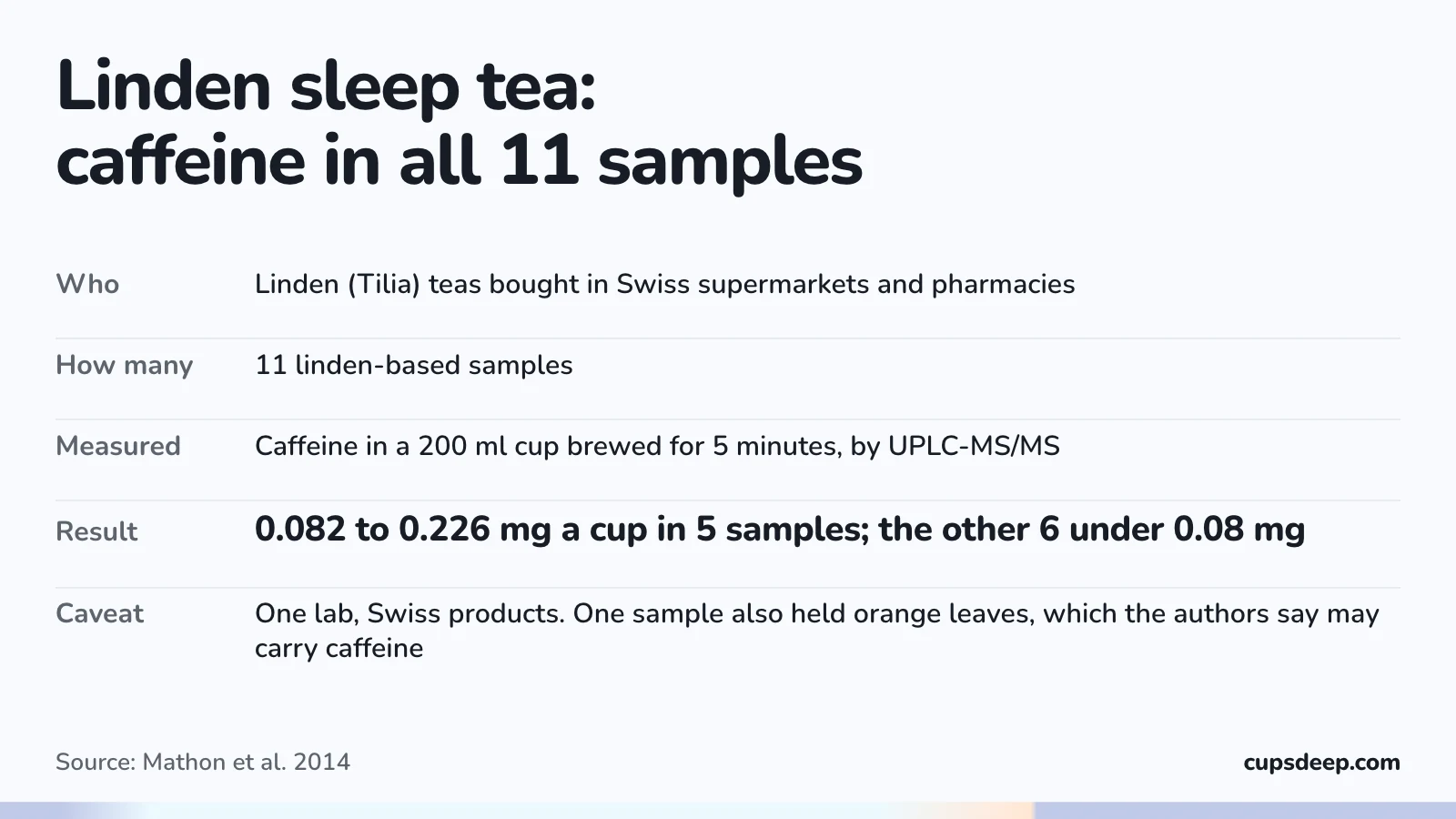
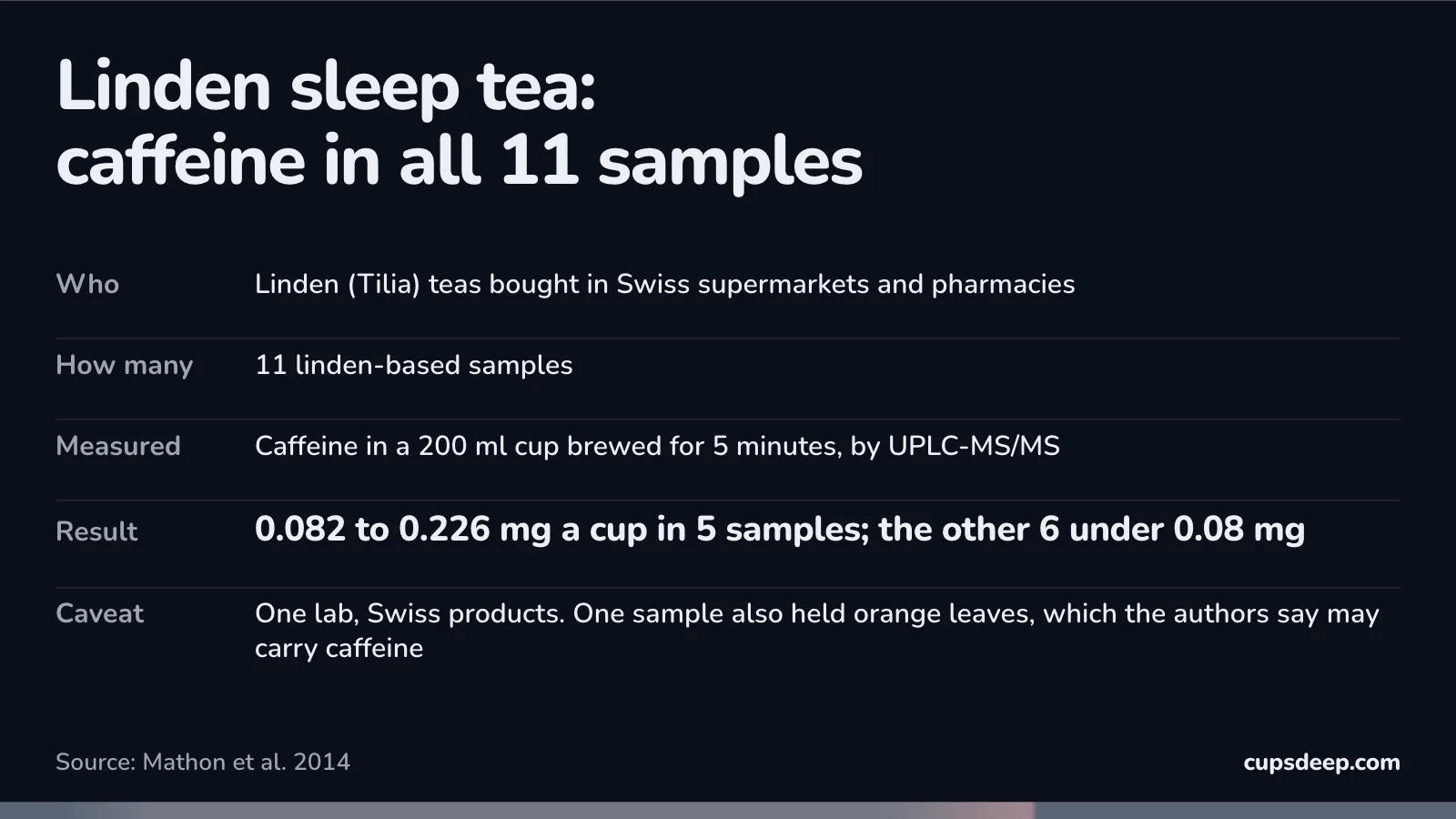
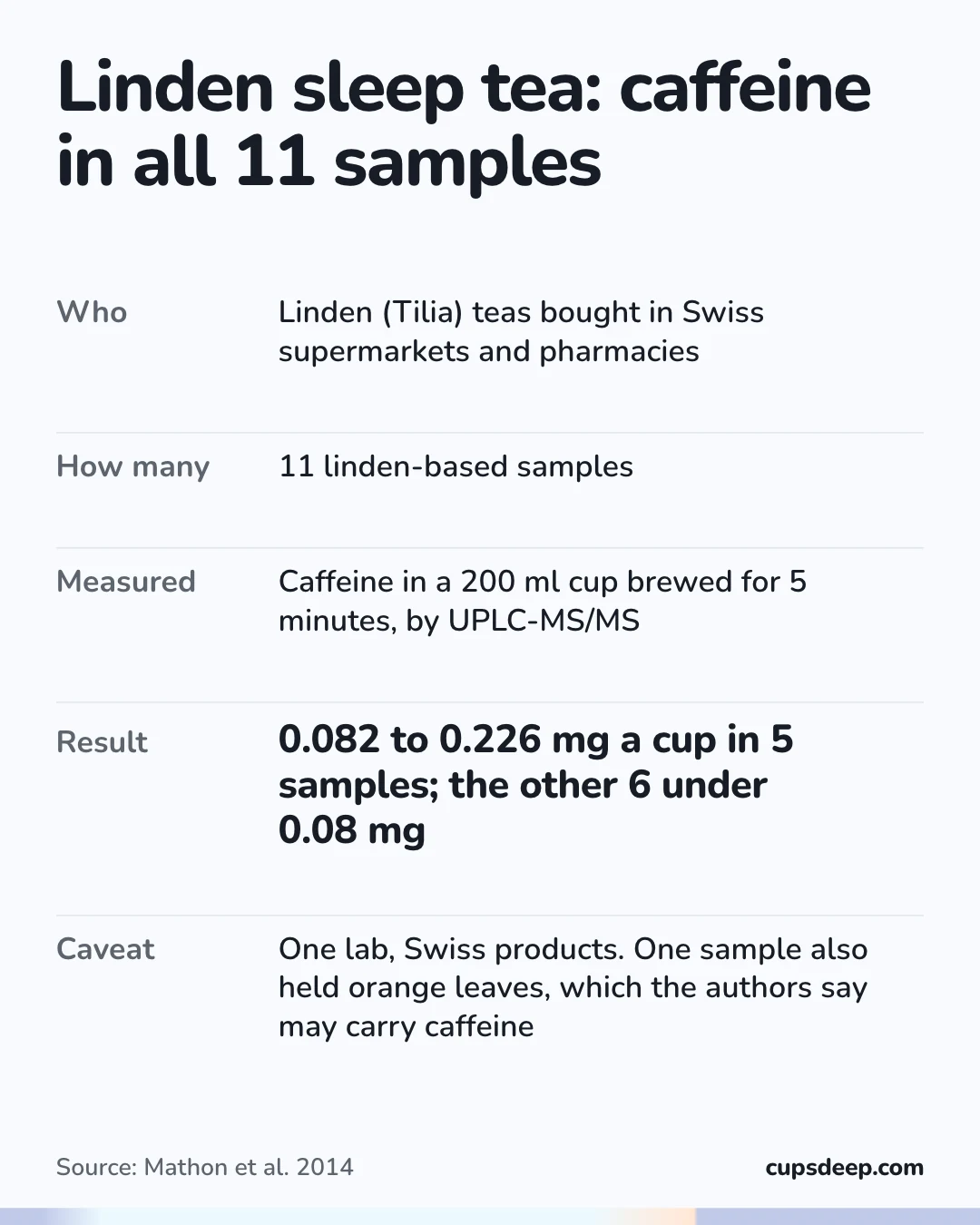
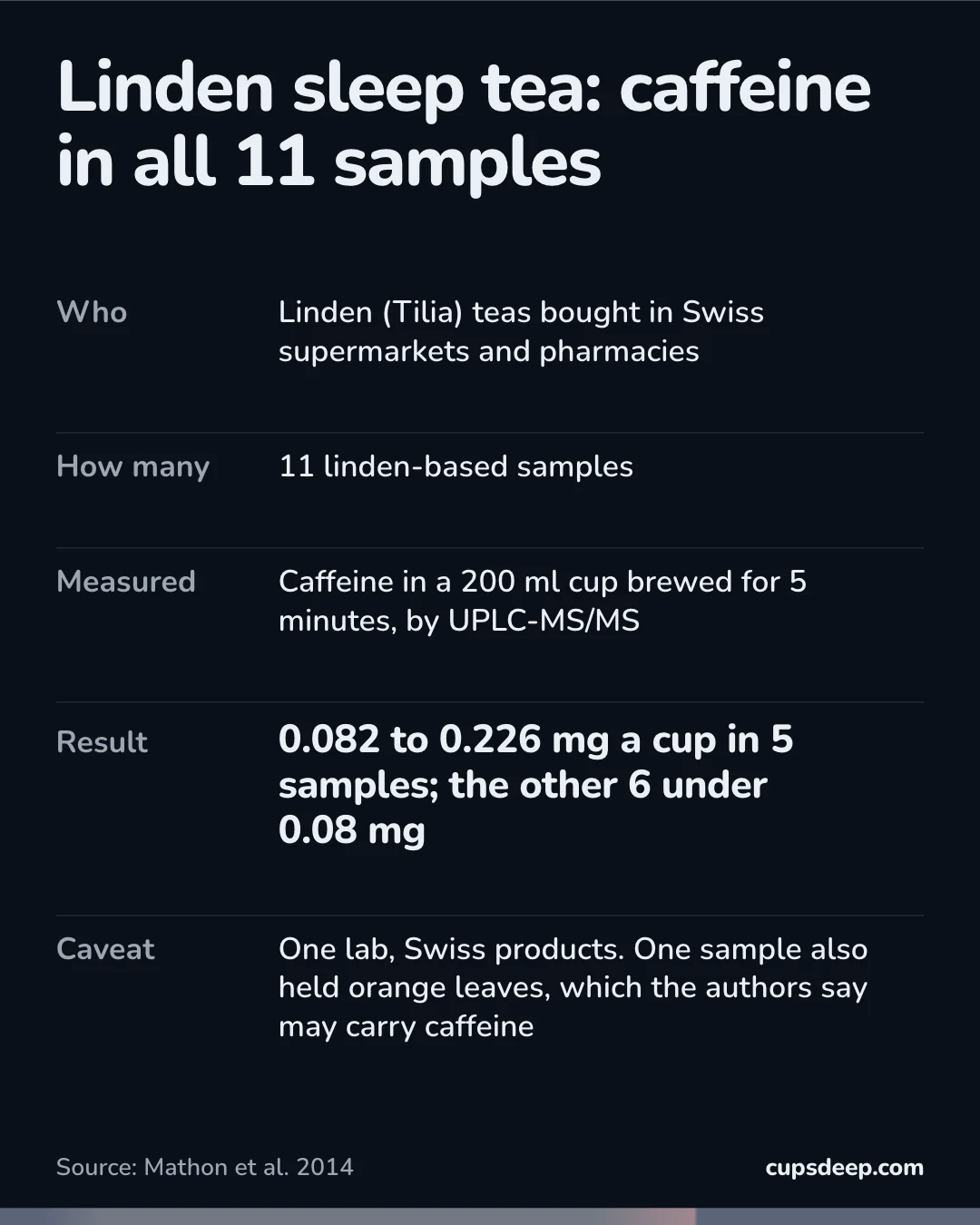
Keep the units straight, because they are small. The strongest cup was 0.226 mg, which the abstract writes as 226 µg: micrograms, not milligrams. 6 samples held caffeine below 0.08 mg, the least the method could put a number on.
By our arithmetic, a 200 ml cup of black tea at 40 mg holds about 180 times the caffeine of the strongest linden cup the Swiss lab measured, in the same volume of water, or 161 to 197 times within the lab's stated uncertainty, and 500 times the lab's 0.08 mg limit of quantification. 48614
So a 200 ml cup of black tea holds about 180 times as much caffeine as the strongest linden cup, by our arithmetic, or 161–197 times within the lab’s stated uncertainty. The authors add that one of their samples mixed linden with chamomile and orange leaves and flowers, and the orange may have brought its caffeine. We found no measurement we trust of caffeine in plain chamomile.
My sleep tea had caffeine in it. Not enough to notice. Enough to never trust a linden flower again
Is caffeine free the same as decaf?
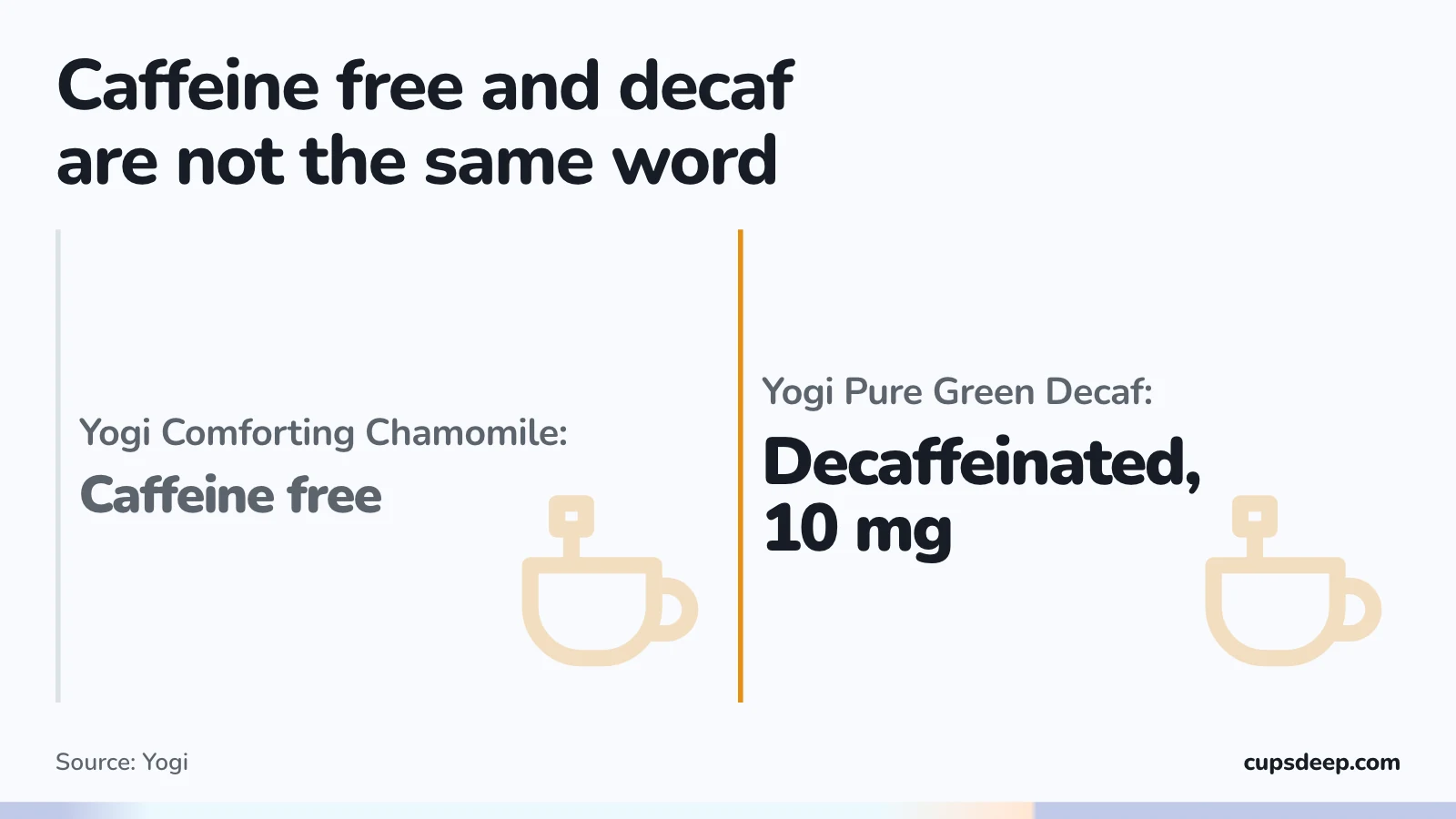
No, and the labels blur it. Caffeine free, on an herbal tea, means a plant that never made any. Decaf means a tea that had caffeine and had most of it taken out. One maker shows the difference on two boxes.
Yogi labels its Comforting Chamomile “Caffeine Free”, with a caffeine amount of 0 in the page data, and its Green Tea Pure Green Decaf “Decaffeinated - 10 mg”. Neither page prints a serving beside the figure. 490493
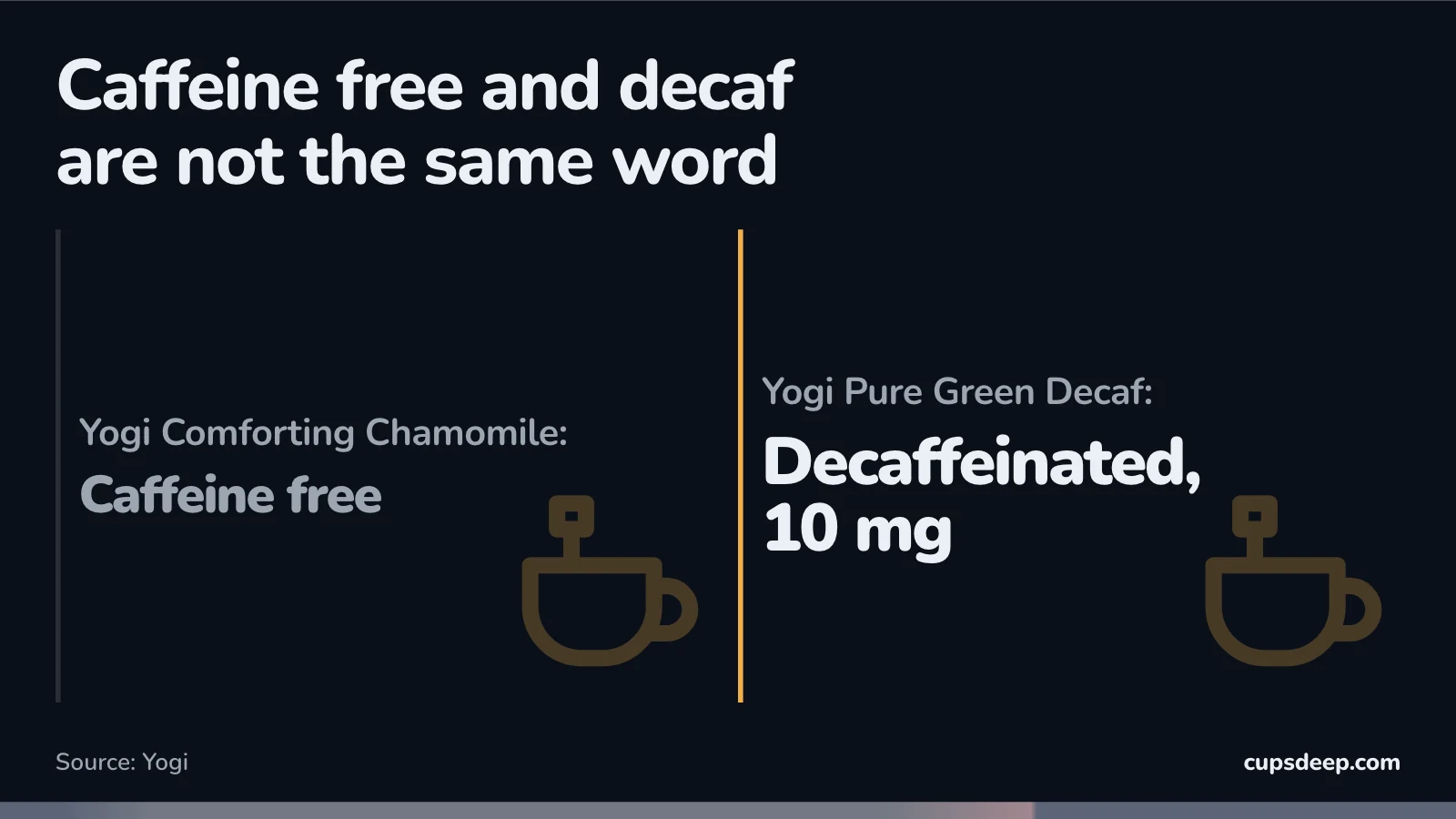
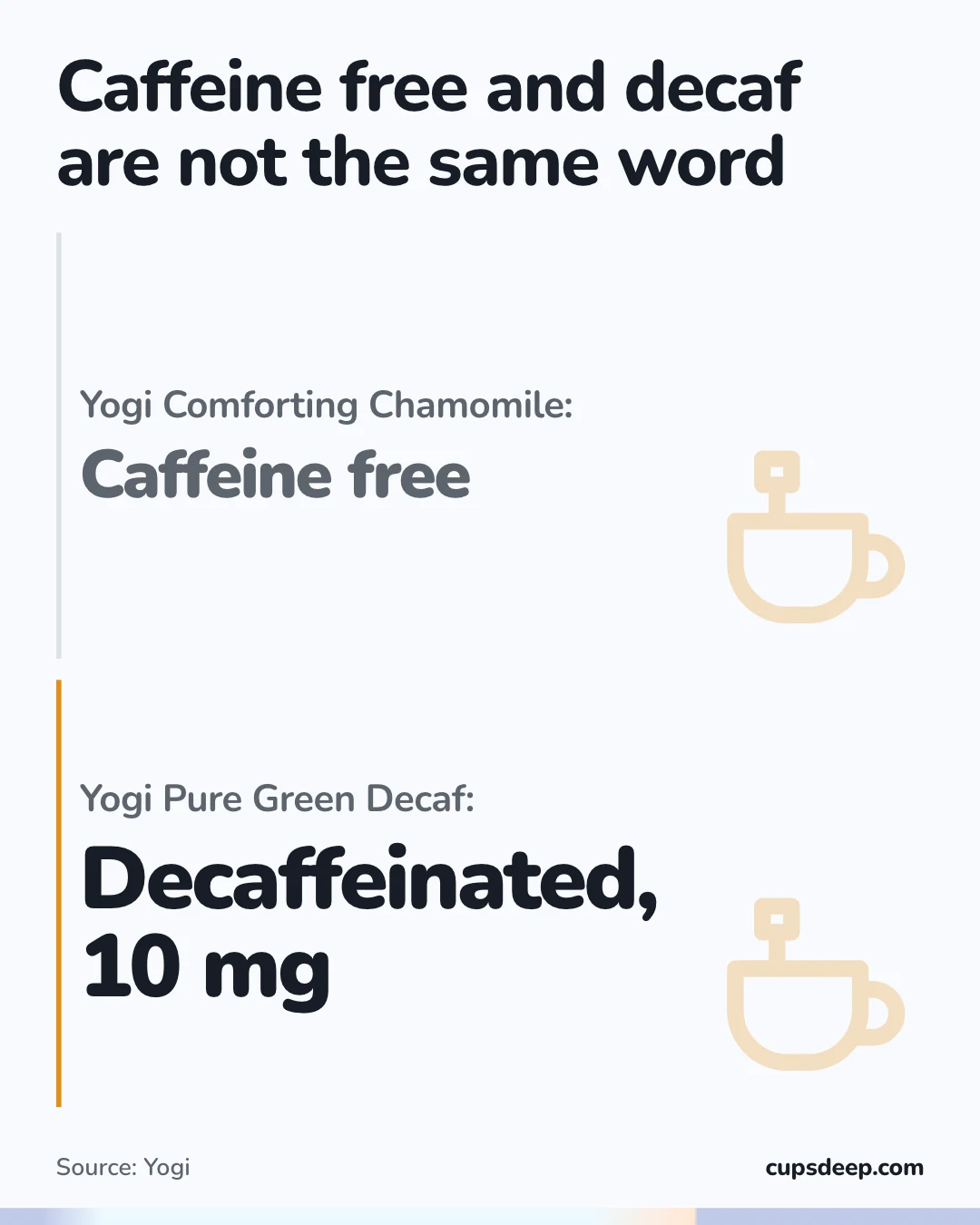

Yogi is not the only one saying decaf is low, not zero. Bigelow says its decaffeinated teas have 1–8 mg per 8 oz cup, The Republic of Tea 2–4 mg per 6 oz, and USDA lists decaf hot black tea at 1 mg per 100 g. A lab that measured decaf teas put them all under 12 mg a serving, a ceiling, not a figure.
Celestial Seasonings' store data tags herbal teas such as Chamomile and Peppermint both “Caffeine Free” and “Decaffeinated”. Its Sleepytime Decaf Lemon Jasmine, titled a “Decaf Green Bedtime Blend”, shows 0 mg on its Caffeine Meter, with no serving stated. 502499
So one store tags a chamomile as decaffeinated, though nothing was taken out of it, and shows a decaf green tea at zero, where Yogi’s decaf green says 10 mg. If the number you want is zero, buy the herb, not the decaf. Decaf coffee works the same way, and the decaf article has its numbers.
Decaf is caffeine on a diet. Caffeine free is caffeine that never showed up
Does the FDA define “caffeine free”?
Not that we could find. We searched the whole US Code of Federal Regulations for the phrase.
A phrase search of the whole US Code of Federal Regulations for “caffeine free” on November 12, 2026 returned 1 section in the current Code, 7 CFR 210.11, USDA's rule for food sold in schools, in force since July 1, 2024, and none in Title 21, where FDA's food rules sit; the search's other results are earlier versions of the same paragraph. That rule says food and drink for elementary and middle school students “must be caffeine-free, with the exception of trace amounts of naturally occurring caffeine substances”. A search for “herbal tea” returned 0 results. A search for “decaffeinated” returns 3 sections, 21 CFR 173.255, 173.290 and 170.3: solvent rules for decaffeinated coffee and a list of food categories, none a definition. We found no FDA definition of “caffeine free” or “decaf” in the Code; that is not proof that none exists, and FDA guidance was not searched. 48548478
The only “caffeine-free” we found in federal rules is for school food, and even that allows trace amounts of naturally occurring caffeine. So, as far as we could find, on a box of tea in the US “caffeine free” is the maker’s word, and “decaf” is the maker’s word too: the Code’s 3 sections with “decaffeinated” set solvent rules and list food categories, and none defines it. That is why this page quotes the makers and not a rule.
Is herbal tea a good swap for coffee or black tea at night?
On caffeine alone, yes. A cup of plain chamomile or peppermint adds nothing to your evening by any figure on this page, a linden cup almost nothing. What matters is the cup it replaces: a 200 ml black tea is about 40 mg and a filter coffee 80 mg, and half of either is still in you about 4 hours later, longer for some people.
A single 100 mg dose of caffeine, about 1.4 mg/kg body weight for a 70 kg adult, may increase the time it takes to fall asleep and reduce sleep duration in some adults, particularly when taken close to bedtime. 2223
We say nothing here about what any herb does to sleep, or about herbs in pregnancy. That is a different question from caffeine, and this page only answers the caffeine one. For the caffeine, the full list of drinks has the rest, and the method page shows how the curve is built.
Questions people ask
Does chamomile tea have caffeine?
No. USDA lists brewed chamomile at 0 mg per 100 g, from 1 data point, Celestial Seasonings’ Chamomile reads 0 mg, and Yogi labels its Comforting Chamomile caffeine free. A blend that adds green or black tea to chamomile has caffeine, so read the ingredients.
Does hibiscus tea have caffeine?
Plain hibiscus, no. Celestial’s Red Zinger, a hibiscus blend, reads 0 mg, and USDA lists brewed hibiscus at 0 mg per 100 g, as an assumed zero rather than a measured one. Yogi’s Soothing Rose Hibiscus is made with green tea and states 12 mg.
Does peppermint tea have caffeine?
Plain peppermint, no: Celestial Peppermint reads 0 mg, and Yogi labels its Purely Peppermint caffeine free. Celestial’s White Chocolate Peppermint is white tea and states 7 mg.
Does rooibos tea have caffeine?
No. Rooibos is described in the research literature as caffeine free, and Yogi lists its Chai Rooibos at 0 mg. A blend can still add tea: Yogi’s Vanilla Spice Perfect Energy has rooibos with black and green tea and states 75 mg.
Is Sleepytime tea caffeine free?
Celestial Seasonings’ Caffeine Meter reads 0 mg for Sleepytime Classic. Sleepytime Decaf Lemon Jasmine is a decaf green tea; its meter reads 0 mg too, though decaf teas from other makers state a few milligrams.
Is decaf tea caffeine free?
No. Decaf tea is low, not zero: Yogi states 10 mg for its Pure Green Decaf, Bigelow 1–8 mg per 8 oz cup for its decaffeinated teas, and USDA lists decaf hot black tea at 1 mg per 100 g. Herbal teas made only of herbs are the ones with none that any maker or USDA states, though a lab found a trace in linden.
Sources
Every number above links to the place it came from. How the numbers are chosen and checked is on the method page; the drink table is at /drinks. Written with AI agents, as the whole site is. A model of a typical body, not advice for pregnancy, illness or medication.
- Development of a Caffeine Content Table for Foods, Drinks, Medications and Supplements Typically Consumed by the Brazilian Population (BraCaffT)
- Spilling the Beans: How Much Caffeine is Too Much?
- Beverages, coffee, brewed, prepared with tap water
- Beverages, tea, green, brewed, regular
- Beverages, tea, black, brewed, prepared with tap water
- Scientific Opinion on the safety of caffeine
- EFSA explains risk assessment: Caffeine
- Electronic Code of Federal Regulations: full-text search for 'decaffeinated'
- Caffeine content of brewed teas (Chin, Merves, Goldberger, Sampson-Cone, Cone; J Anal Toxicol 2008;32(8):702-4)
- Tea, hot, leaf, black, decaffeinated (FNDDS 2021-2023, food code 92302500)
- Bengal Spice Herbal Tea (product page)
- Caffeine in tea (updated 29 April 2026)
- Which Tea Has The Most Caffeine?
- Beverages, tea, herb, brewed, chamomile (SR Legacy 174156, NDB 14545)
- Beverages, tea, herb, other than chamomile, brewed (SR Legacy 173232, NDB 14381)
- Beverages, tea, hibiscus, brewed (SR Legacy 171946, NDB 14649)
- Tea, ginger (FNDDS, food code 92306850)
- Tea, hot, herbal (FNDDS, food code 92306000)
- 7 CFR 210.11, Competitive food service and standards, paragraph (j) Caffeine
- Electronic Code of Federal Regulations: full-text phrase search for “caffeine free”
- Mathon C, Edder P, Christen P, Bieri S. Unexpected Occurrence of Caffeine in Sleep-Inducing Herbal Teas. CHIMIA 2014;68(10):705-709
- Soothing Rose Hibiscus Skin Detox (product page)
- S’mores (product page)
- Vanilla Spice Perfect Energy (product page)
- Comforting Chamomile (product page)
- Purely Peppermint (product page)
- Ginger (product page)
- Green Tea Pure Green Decaf (product page)
- Chamomile Herbal Tea (product page)
- Peppermint Herbal Tea (product page)
- Red Zinger Herbal Tea (product page)
- Jammin’ Lemon Ginger Herbal Tea (product page)
- Sleepytime Classic Herbal Tea (product page)
- Sleepytime Decaf Lemon Jasmine (product page)
- White Chocolate Peppermint (product page)
- Honey Lemon Ginseng Green Tea (product page)
- Yerba Madre Mate Bags (product page)
- Enlighten Mint (product page)
- Organic Brewed Yerba Mate, Strawberry Hibiscus (product page)
Keep reading

Coffee
Does decaf coffee have caffeine?
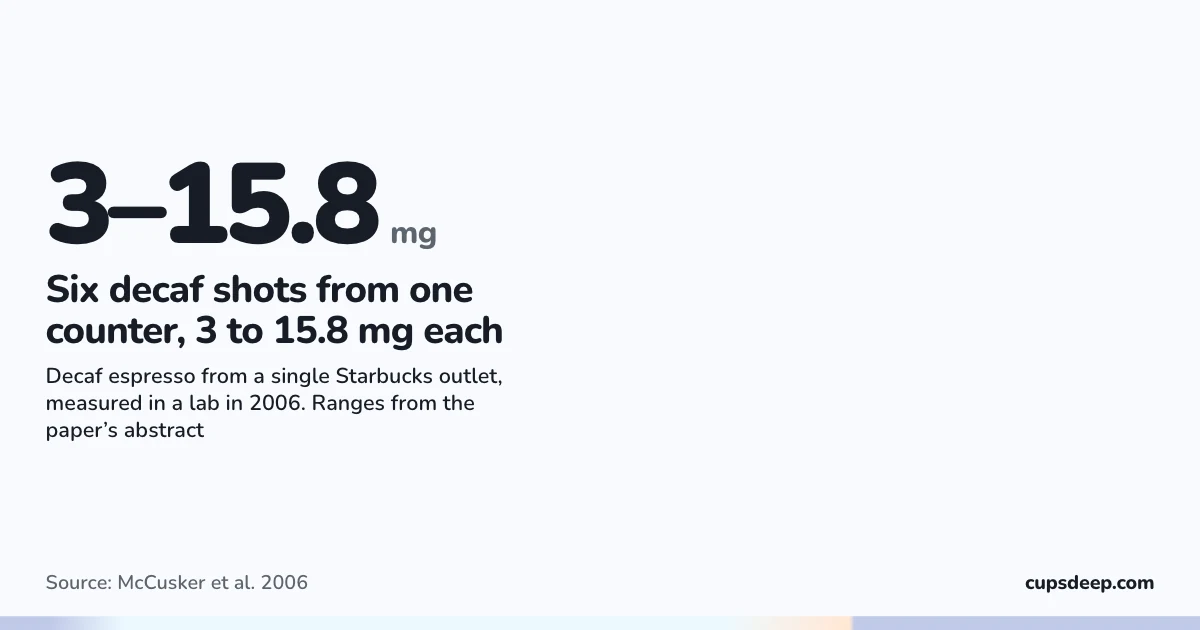
Yes. FDA puts decaf at 2–15 mg per 8 fl oz cup, and Starbucks lists 25 mg for a grande. The lab ranges, the law and the maths.
Tea and mate
Does green tea have caffeine?
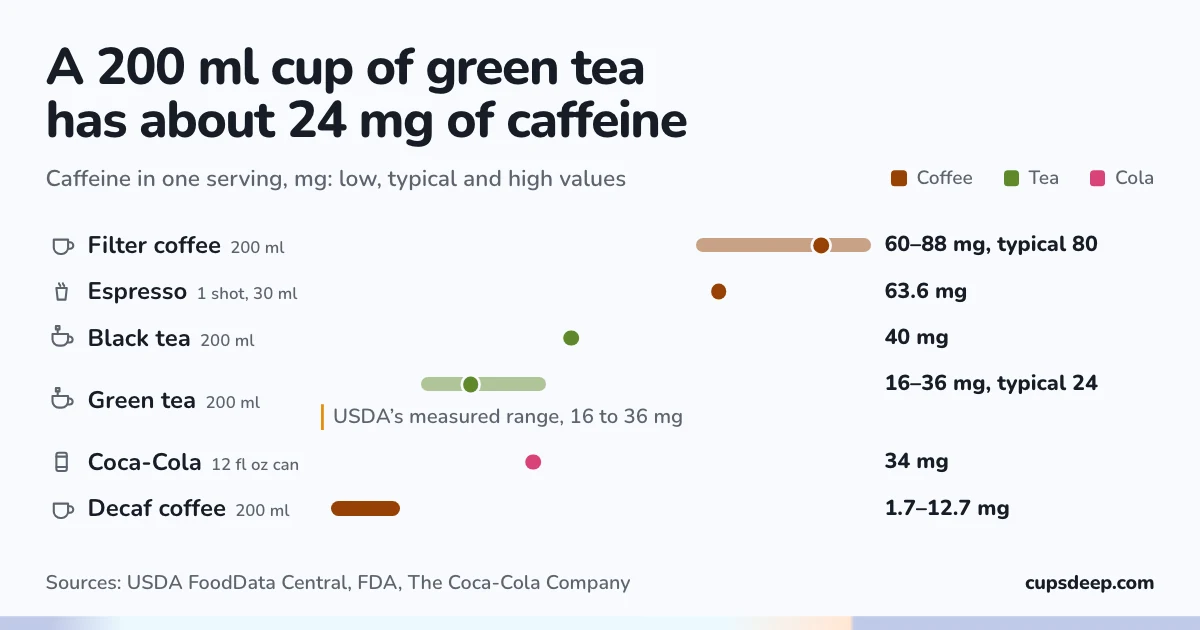
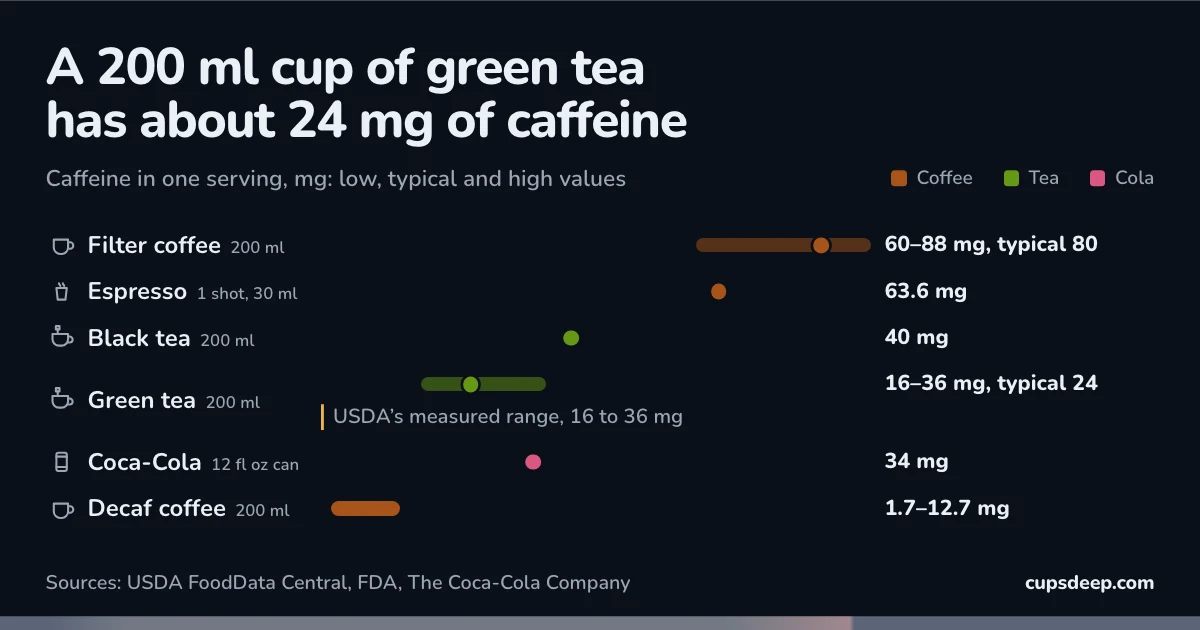
Yes: about 24 mg in a 200 ml cup, by USDA. How long you steep it, the bag, gyokuro and bottled teas from Ito En to AriZona, all with sources.

Tea and mate
Does chai have caffeine?
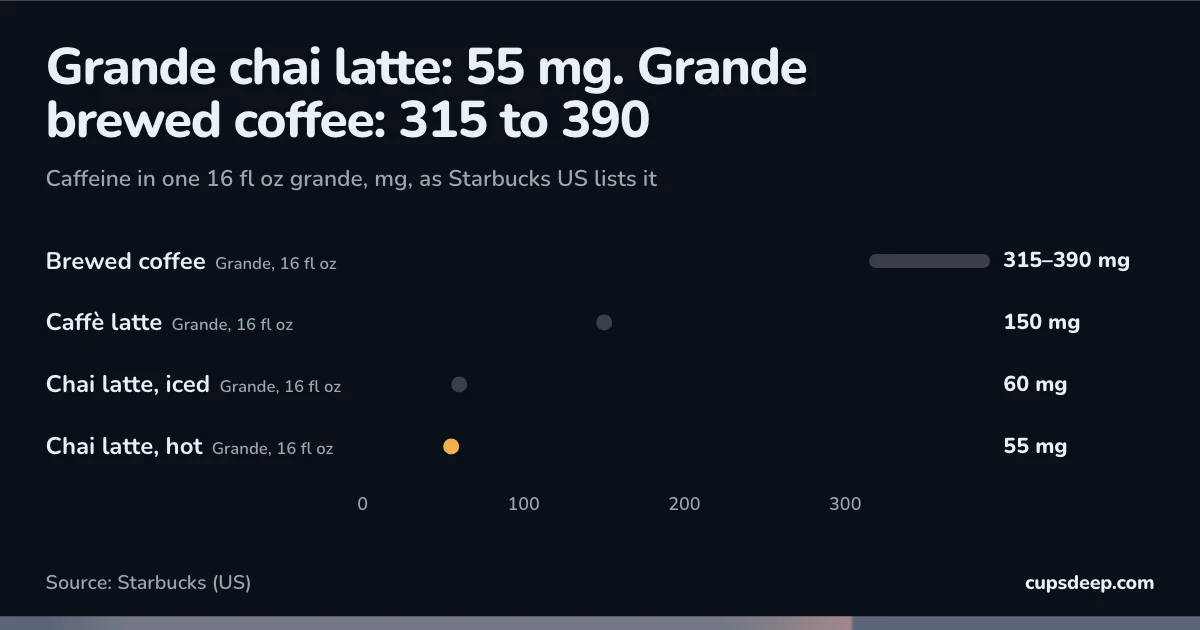
Yes. Chai is spiced black tea. A Starbucks grande chai latte lists 55 mg, a brewed cup is about 40 mg, and rooibos chai has none.