Why does caffeine make me tired?
Page one says adenosine piles up behind the caffeine and hits you all at once when it wears off. We went looking for the study that measured that and did not find one. We found something less flattering instead: the tiredness is mostly the habit asking for its next payment.
The short answer
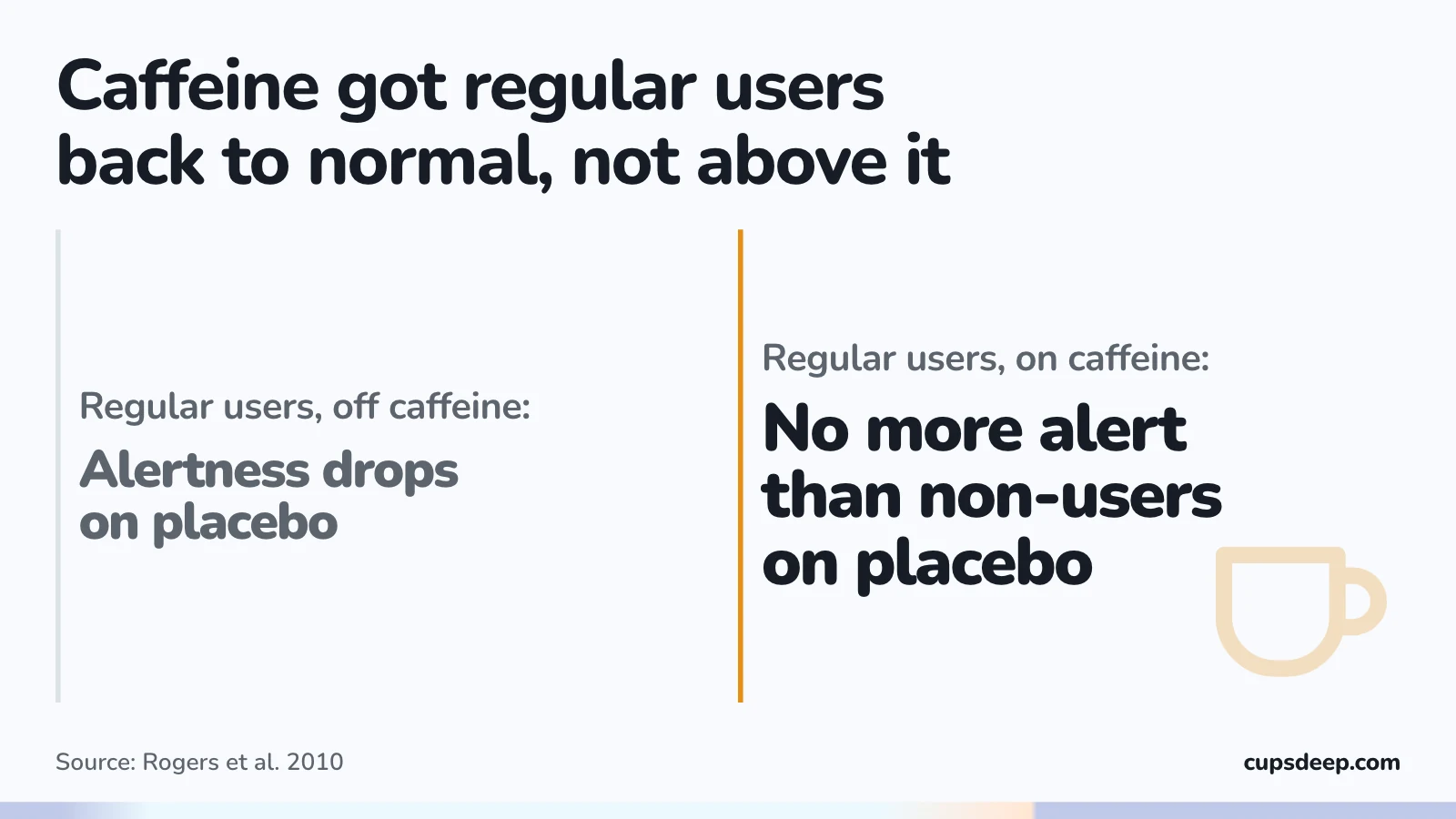
If you drink caffeine every day, mostly because of withdrawal. In a double-blind trial of 379 people, regular users kept off caffeine for 16 hours got less alert on placebo, and 100 mg and then 150 mg of caffeine only brought them back to baseline, no higher than non-consumers on placebo. Sugar in the cup and short sleep after a late coffee add their own tiredness; the popular “adenosine flood” is a story we found no human measurement for.

Why does caffeine make me tired instead of awake?
Because for a regular drinker, the morning coffee is not lifting you above normal. It is lifting you out of a hole the last coffee dug. That is not a metaphor we made up; it is what the trials designed to test it found.
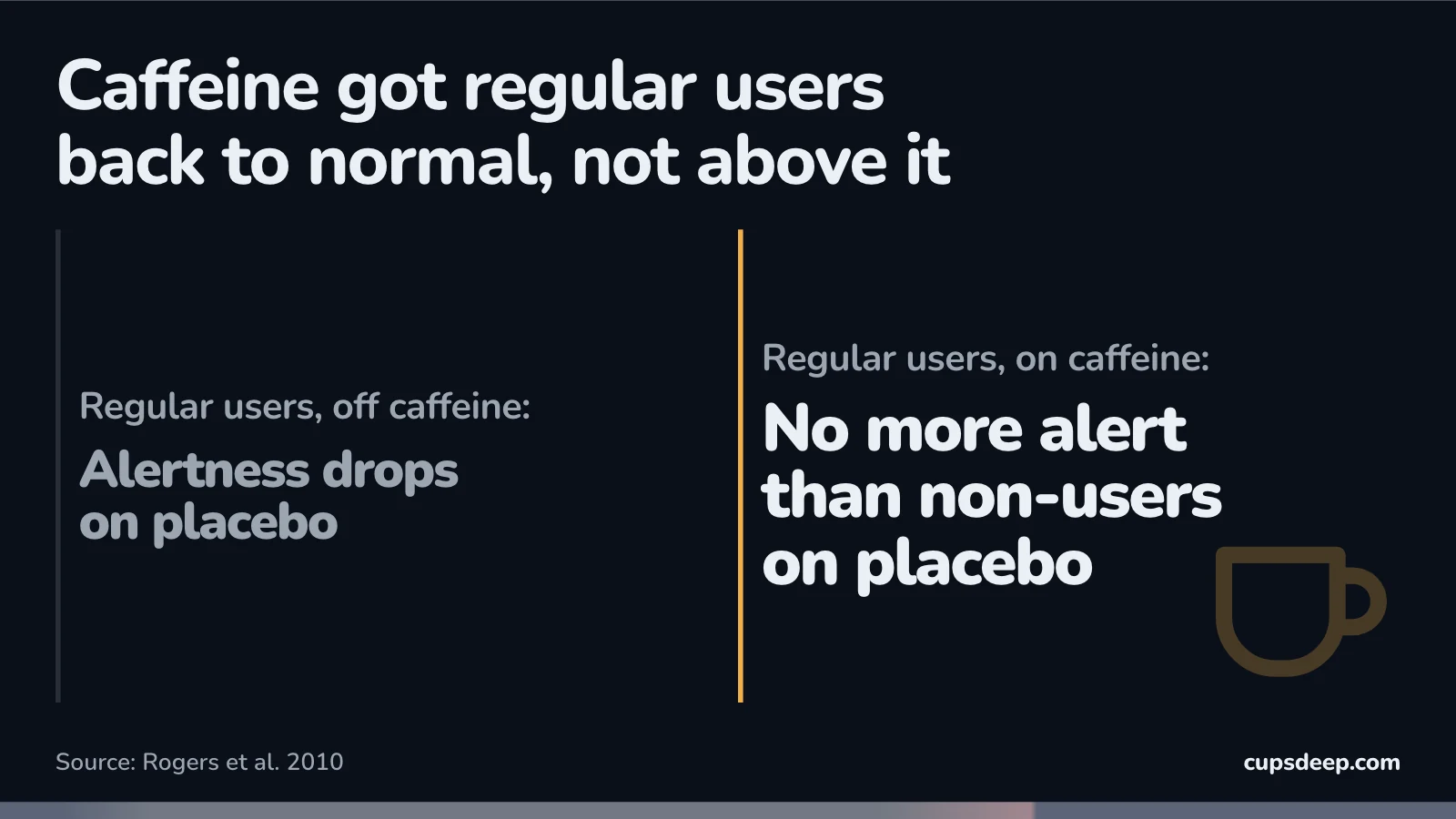
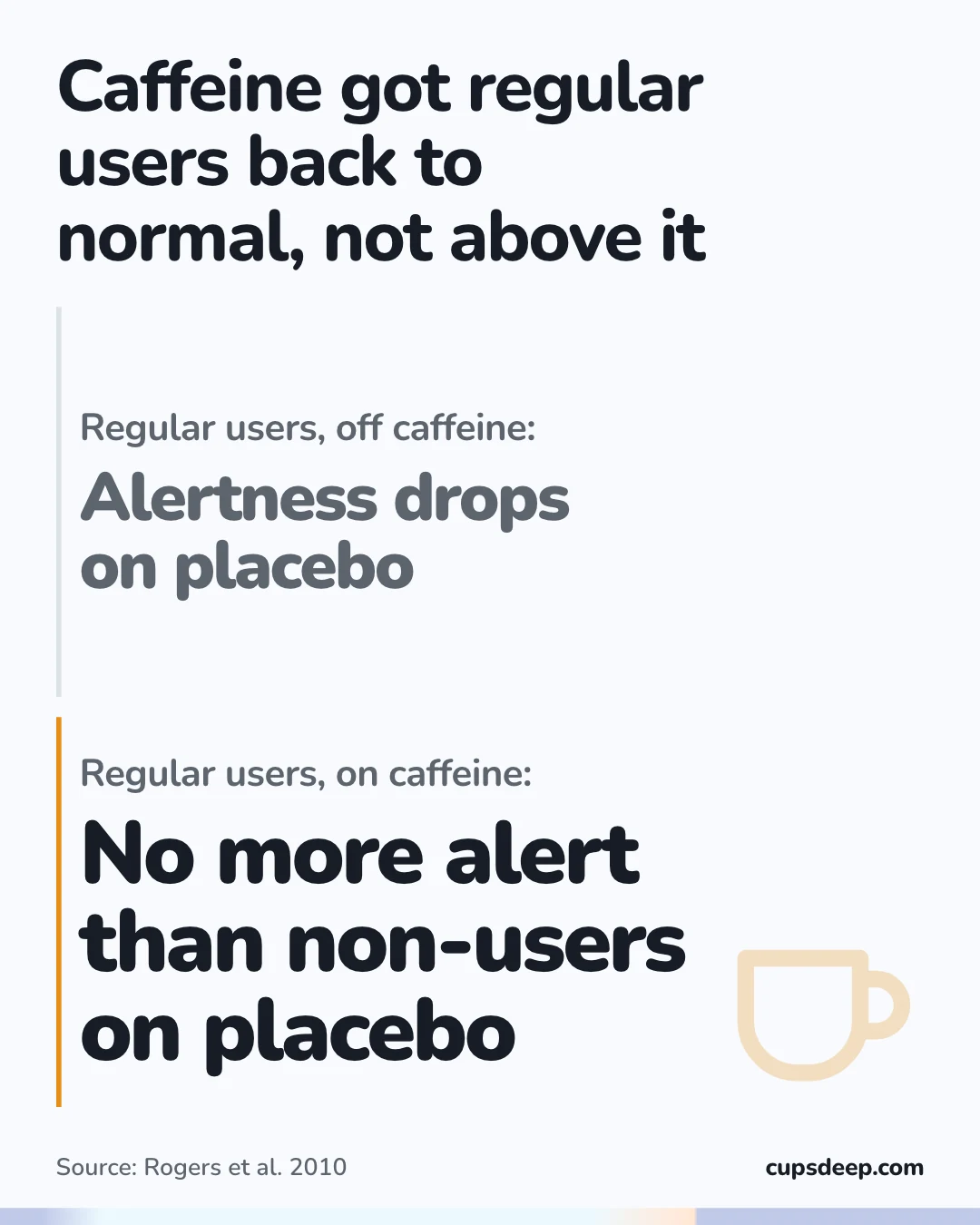
In a double-blind trial of 379 people (162 who drank little or no caffeine and 217 who drank a medium or high amount), everyone went 16 hours without caffeine and then took 100 mg and, 90 minutes later, another 150 mg, or placebo. On placebo, the regular users’ alertness fell. Caffeine did not raise alertness in the light users, and in no group did it raise alertness above that of the non-consumers on placebo. The authors conclude that abstinence reduces alertness and caffeine “merely returns it to baseline”. 617
Read that again with your own habit in mind. The medium group in that trial averaged 128 mg/day, about one and a half cups of filter coffee at 80 mg each, and the high group 346 mg/day. That conversion is ours. Without caffeine, the regular users’ alertness fell on placebo. With it, they got level with the people who barely touch caffeine, and no higher. Level is not nothing. It is just not the superpower on the bag.
I’m not energized. I’m just not in withdrawal
In a second report from the same trial, on the 369 participants with complete data (212 medium-high and 157 non-low consumers), overnight withdrawal brought greater sleepiness, lower mental alertness and slower reactions, worse in the afternoon than in the morning. Caffeine (100 mg, then 150 mg) improved these in the regular consumers. In the light consumers it reduced sleepiness but raised anxiety and jitteriness, and did little for alertness. The authors conclude that frequent consumption fails to enhance mental alertness. 618
A focused review of the experimental studies concluded that caffeine’s effects on performance and mood, widely seen as a net boost, are “almost wholly attributable to reversal of adverse withdrawal effects” after short periods without it, and found little evidence of a benefit from long-term use against abstinence. Read as an abstract only. 619
Here is every reason the top pages give for feeling tired after coffee, set against what we could find. The ranking is ours; the evidence is linked further down.
| Explanation | What we found | Our read |
|---|---|---|
| Withdrawal in regular users | One double-blind trial of 379 people, reported twice | Strong |
| Less sleep from caffeine | A meta-analysis: 45.3 minutes less sleep, pooled | Strong |
| Sugar in the cup | A meta-analysis of 31 studies: more fatigue in the first half hour | Moderate, for carbohydrate in general |
| Dehydration | A controlled trial in 50 men who drank coffee daily: about like water | Contradicted |
| Adenosine “flooding in” as caffeine leaves | No human measurement found | Unmeasured |
| Cortisol swing, adrenal fatigue, mold | No primary source found | Unsupported |
The trial and meta-analysis figures are from the sources cited on this page. “Our read” is our judgment of how direct the evidence is, not a finding of any paper.
What is a caffeine crash, and when does it hit?
We found no lab definition of “the crash”. What the research does have is withdrawal, and its list includes the ones people call a crash: fatigue, drowsiness, less energy, less alertness. It typically starts 12–24 hours after the last caffeine, which is why it shows up as a slow morning rather than a cliff an hour after lunch. The full clock is in caffeine withdrawal symptoms.
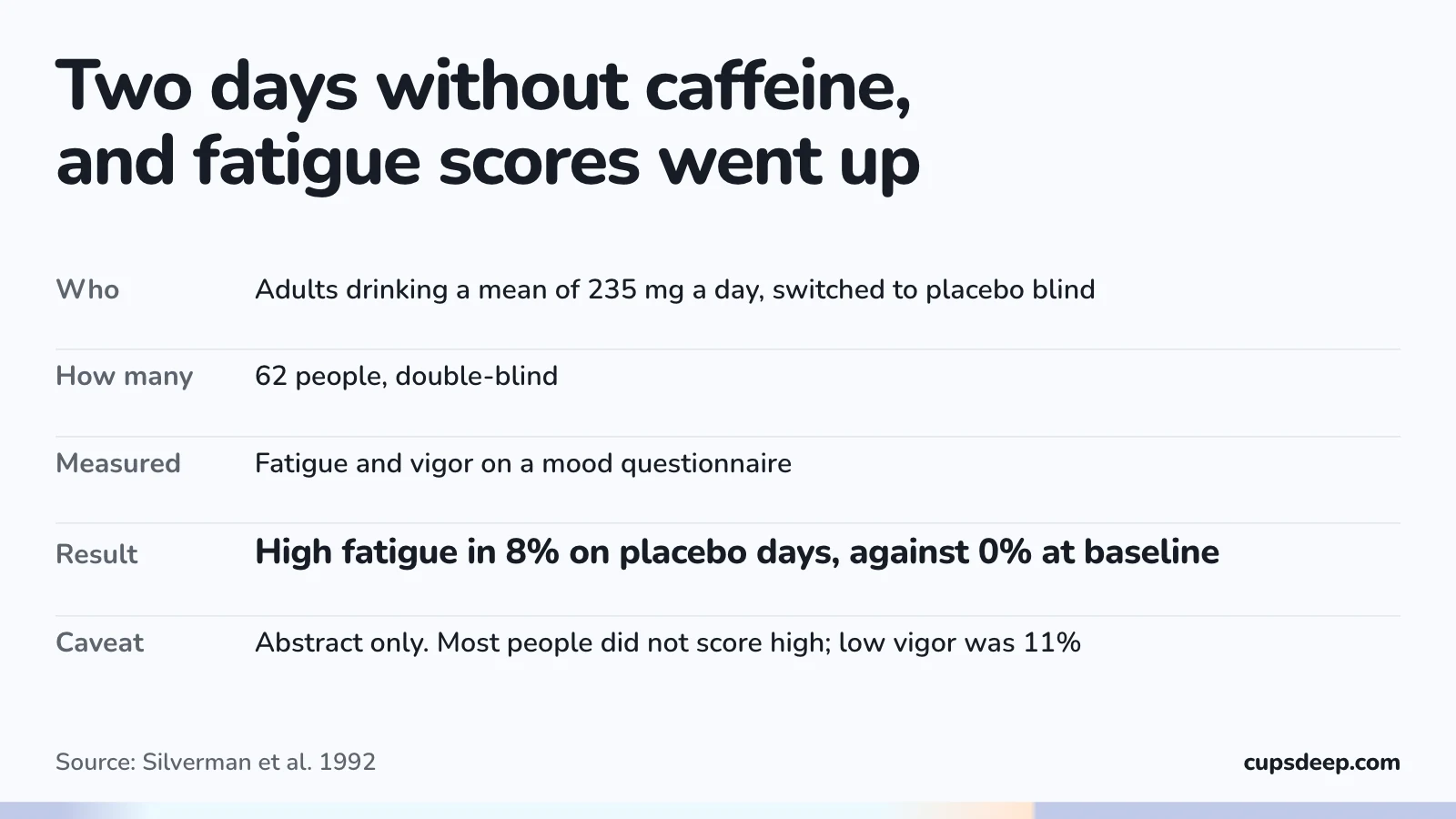
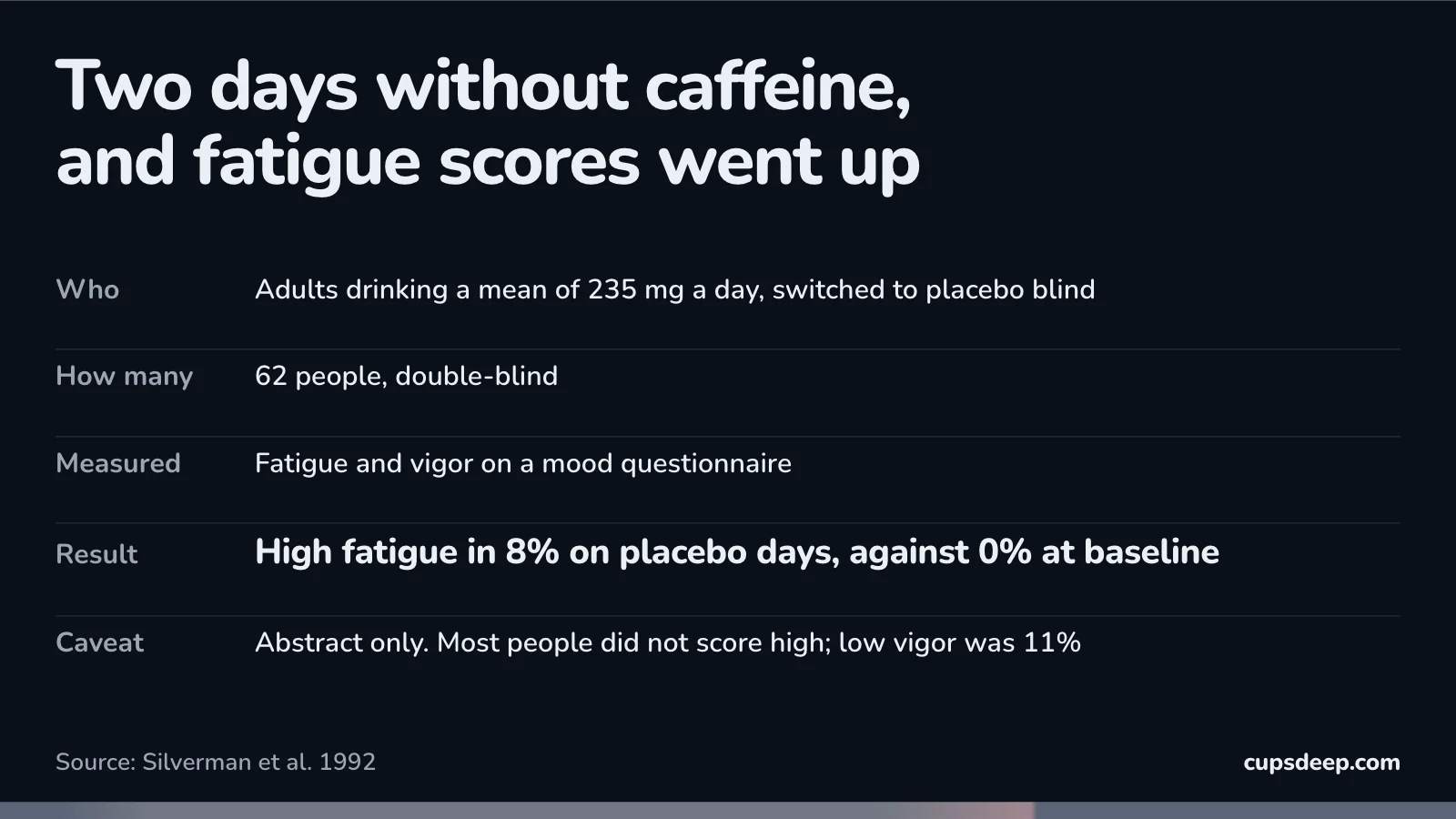
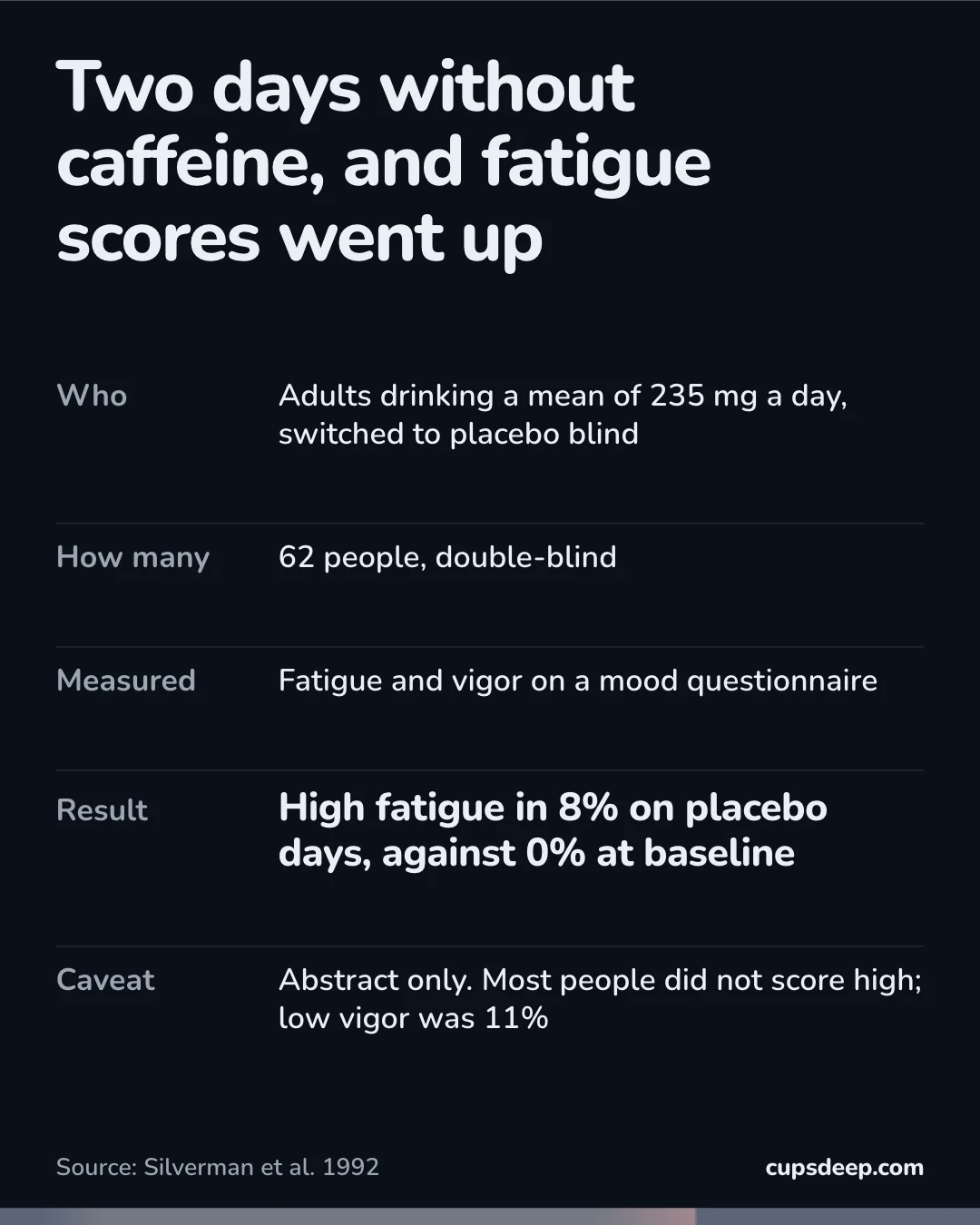
In the double-blind trial of 62 adults drinking a mean of 235 mg a day, two days on placebo instead of their usual caffeine gave 8% high fatigue scores and 11% low vigor scores on a mood questionnaire, against 0% for both at baseline. On the caffeine days the figures were 0% and 2%. Read as an abstract only. 187

Tiredness may be the most telling part. One small study found it was the most sensitive sign of withdrawal it measured.
In a study of normal subjects kept off caffeine for 24 hours (9 people) or 7 days (12 people), then given 250 or 500 mg of caffeine or placebo, tiredness was the most sensitive sign of withdrawal. Caffeine raised alertness only in the group that had been off it for 24 hours; after 7 days off, it had no effect, which the authors read as showing that drowsiness and lethargy are passing withdrawal symptoms. The headache came on 24 to 30 hours after stopping. Read as an abstract only. 621
In a double-blind study of 20 young men who each took 150 mg of caffeine three times a day for 10 days, placebo for 10 days, and caffeine for 8 days followed by 2 days of placebo, the withdrawal condition brought more sleepiness, more attentional lapses and signs of higher sleep pressure in the late evening than both placebo and continued caffeine. Neither melatonin nor cortisol timing changed. Read as an abstract only. 620
So the honest picture of a crash is a regular user whose last dose has worn off, not a single coffee pushing a non-drinker below where they started. We found no study showing that second thing. The one trial above that included people who rarely drink caffeine (Rogers and colleagues) reports no slump below baseline after a dose in them.
It’s not a crash, it’s a landing
Does adenosine build up and hit you all at once when caffeine wears off?
Half of that is solid. Caffeine works mainly by blocking adenosine receptors, adenosine rises the longer an animal is kept awake (measured in cats), and in people a night without sleep raised A1 receptor binding.
Caffeine's effects come mainly from blocking adenosine receptors: of the four types, it blocks A1 and A2A, which are found in the central nervous system. It also acts, at least in part, by facilitating dopamine D2 receptor transmission, a mechanism that appears substantially different from that of stimulants such as cocaine and amphetamine. 22
In cats, adenosine in the basal forebrain rose steadily while the animals were kept awake and fell slowly during recovery sleep. In six animals it reached about twice its starting level after 6 hours of enforced waking, and after 3 hours of recovery sleep it had not yet returned to where it began. 624
In 12 healthy people kept awake for 24 hours, PET scans showed more A1 adenosine receptor binding in every brain region examined, by up to 15.3% in the orbitofrontal cortex. Ten controls who slept normally showed no change. Read as an abstract only. 623
The other half, the flood, is where it stops. Mattress blogs and coffee roasters describe adenosine waiting behind the caffeine and landing all at once, some of them at “double the force”. We found no study that measured that in people. And the picture of caffeine blocking everything until it leaves does not fit the human PET measurement we found of how much of one receptor type, A1, it actually holds.
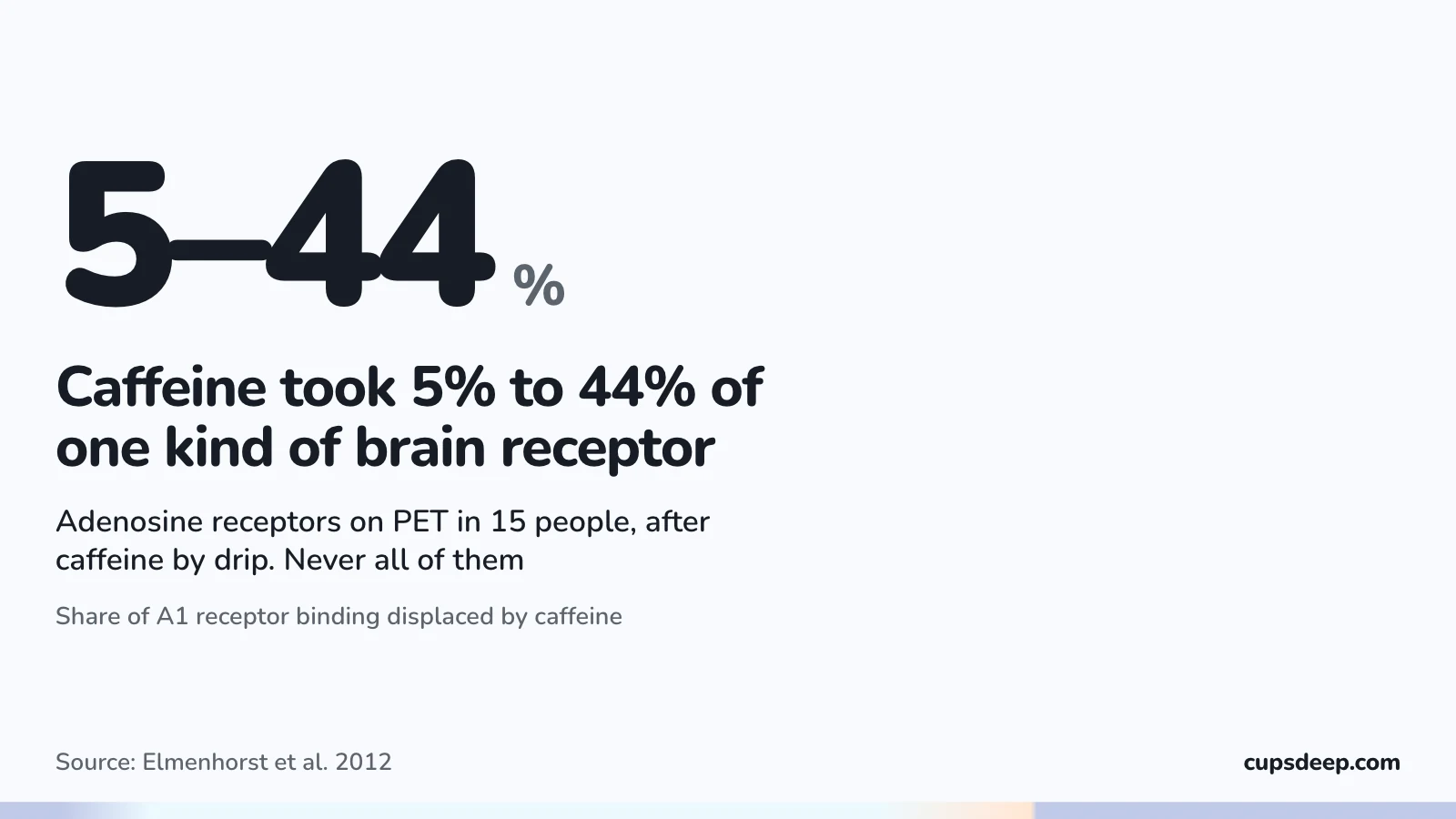
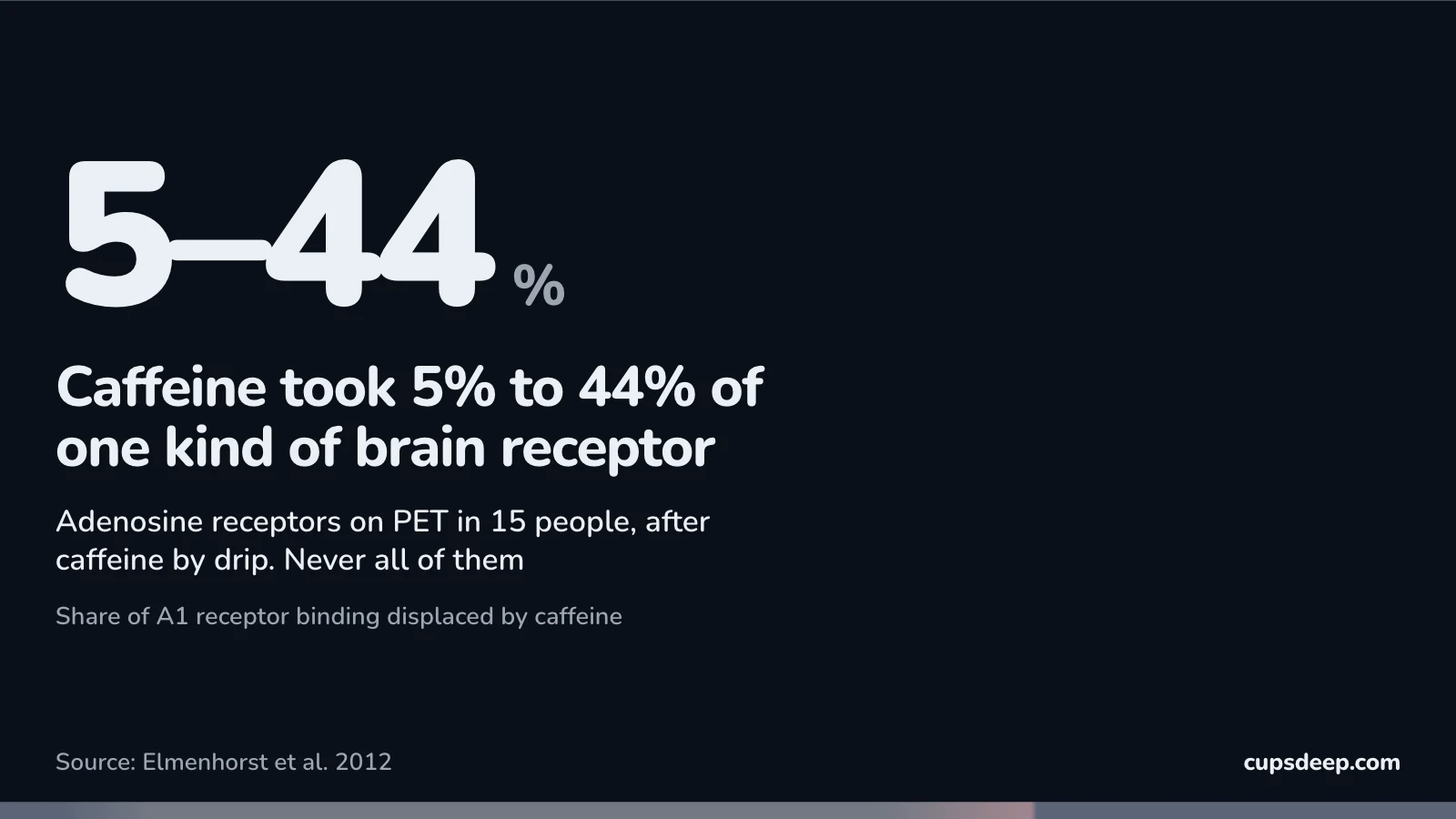
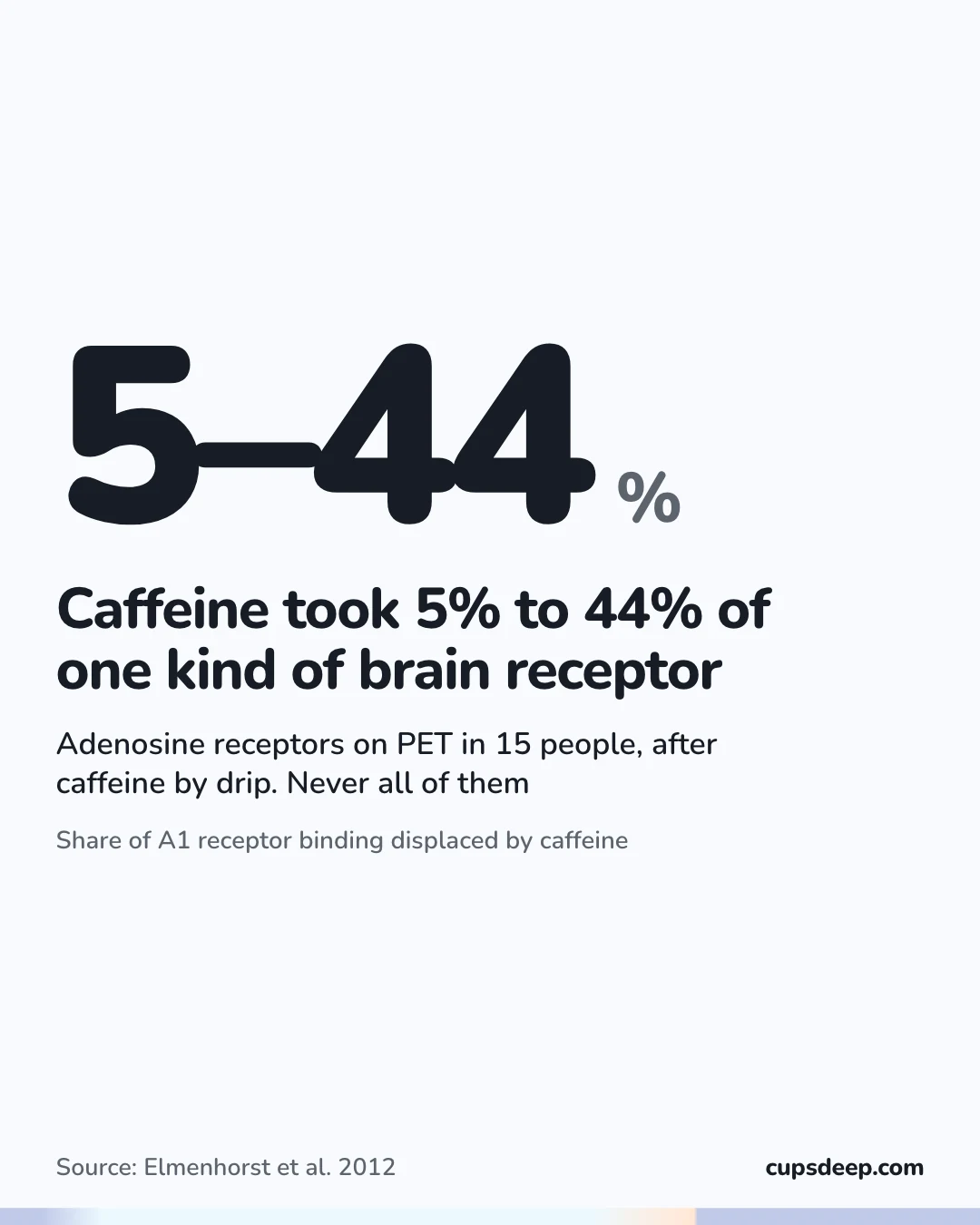
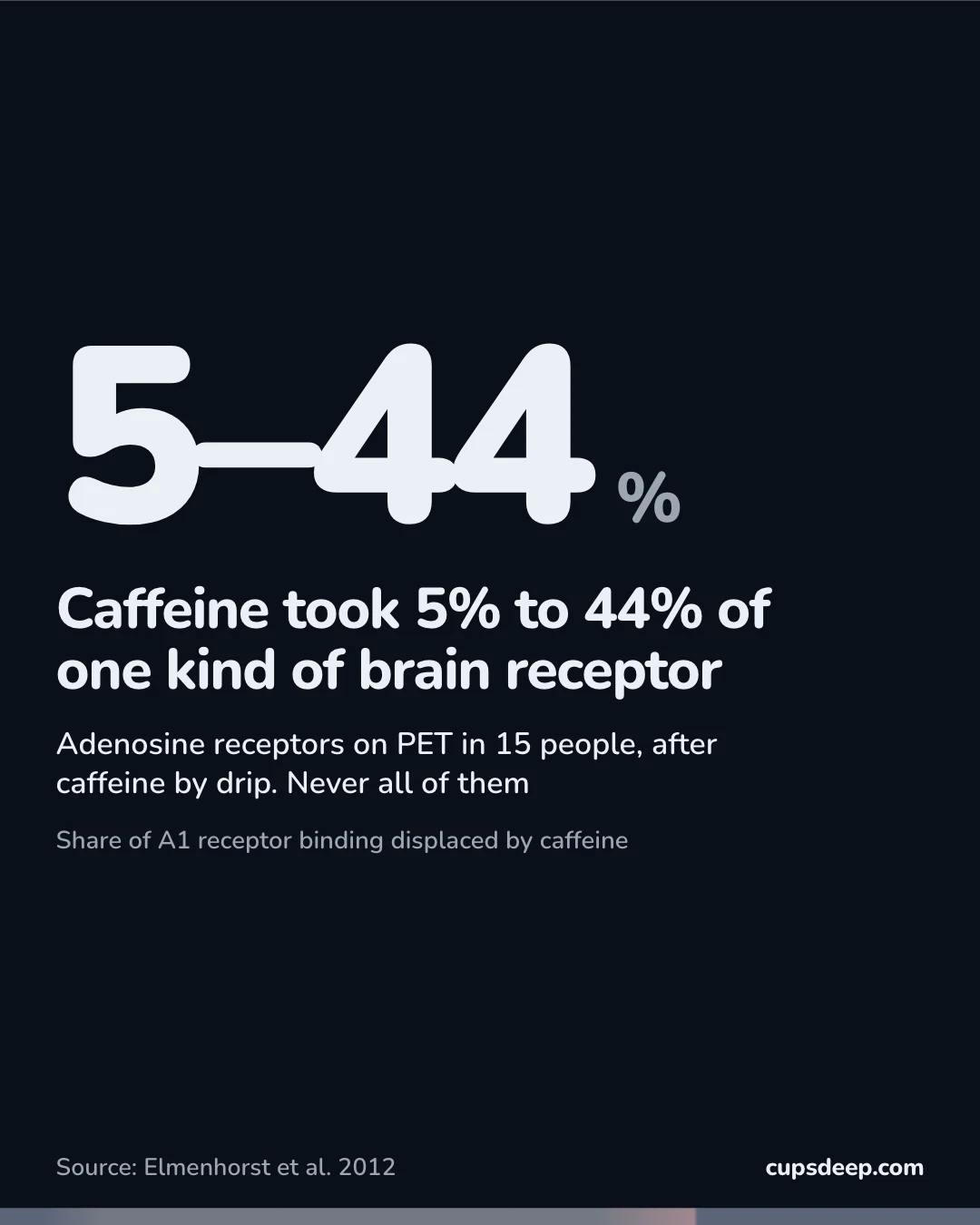
In a PET study of 15 people kept off caffeine for at least 36 hours and then given caffeine by infusion, caffeine took up 5% to 44% of the brain’s A1 adenosine receptors, rising with the level in the blood. Half of the receptors were taken at a blood level the authors equate to 450 mg in a 70 kg person, “approximately 4.5 cups of coffee”, and they estimate that drinks through a day might occupy up to 50%. Read as an abstract only. 622
The adenosine flood has many reporters and no witnesses
Does caffeine tolerance mean your brain grows more adenosine receptors?
Possibly, but the pages we read that say so leave out what the receptors were counted in. Tolerance itself is not in doubt: it develops to some of caffeine’s effects, how much varies widely between people, and to some effects it is quick.
Tolerance develops to some but not all of caffeine's effects, and how much develops varies widely between people. Tolerance to its effects on blood pressure and heart rate usually develops within a couple of days. Whether tolerance explains why people differ in how coffee affects their sleep is uncertain; some authors put those differences down to variation in sensitivity between and within people instead. 22
The receptor counts behind the “more receptors” story come from mice and from human blood. Here they are with their labels on.
| Measured in | Finding |
|---|---|
| Mouse brain (cortex) | A1 receptors up 22% at about 100 mg/kg a day; a significant rise within about 3 days; back within 7 days of stopping |
| Human blood platelets | A2A receptors up about 31% after a week at 750 mg/day (our arithmetic) |
| Human blood platelets | No change after a week at 400 mg/day; a rise at 600 mg/day |
| Human brain, PET | Caffeine held 5–44% of A1 receptors |
| Human brain, PET, after a night awake | A1 receptor binding up to 15.3% higher. Sleep loss, not caffeine |
| Cat brain | Adenosine about 2 times its starting level after 6 hours awake |
Platelets are blood cells, not brain cells. We found no study counting adenosine receptors in the brains of human caffeine users before and after a habit.
In human blood platelets, not the brain, regular caffeine raised the number of A2A adenosine receptors. In 9 volunteers on 750 mg a day for a week, the receptor count (Bmax) went from 98 to 128 fmol/mg protein 12 hours after the last dose and to 132 at 60 hours. In 45 volunteers, 400 mg a day for one week had no effect, while 400 mg a day for two weeks or 600 mg a day raised it. Both read as abstracts only. 626627
In mice drinking caffeine, A1 adenosine receptors in the cerebral cortex rose significantly within about 3 days, and the change reversed within 7 days of stopping. In one experiment, mice on about 100 mg per kg of body weight a day had 22% more cortical A1 binding than controls. This is a mouse study. 625
So “your brain grew more receptors, so you need more coffee” is a plausible story built from a mouse cortex and human blood. It may be true of your brain. Nobody we found has shown it there.
Is it the sugar in your coffee, not the caffeine?
It can add to it, though not in the way the blogs draw it. The usual sketch is a spike in blood sugar, then insulin, then a crash. We found no study tying that sequence to a coffee. What we did find is a meta-analysis on whether sugar lifts mood at all.
A meta-analysis of 31 studies with 1,259 participants (176 effect sizes) found no positive effect of carbohydrate on any aspect of mood at any time after consuming it. Against placebo, it was linked to more fatigue in the first 30 minutes and less alertness at 31 to 60 minutes; neither difference was significant after an hour. 628
No “sugar rush”, then, and a little more fatigue and a little less alertness within the hour. The analysis covers carbohydrate in general, not syrup in a latte specifically. One small study did test a sugary energy drink on short sleep.
In 10 people who had slept only 5 hours the night before, a 250 ml energy drink with 42 g of sugars and 30 mg of caffeine did not counteract sleepiness against a sugar-free, caffeine-free control, and led to slower reactions and more lapses in the last test session, around 80 minutes after drinking. Read as an abstract only. 629
That drink had 30 mg of caffeine, less than a can of Coke at 34 mg, and 42 g of sugars, and it made already-sleepy people slower, not faster. A sweet coffee is not that drink. If yours is mostly syrup, it is closer to it than you might like.
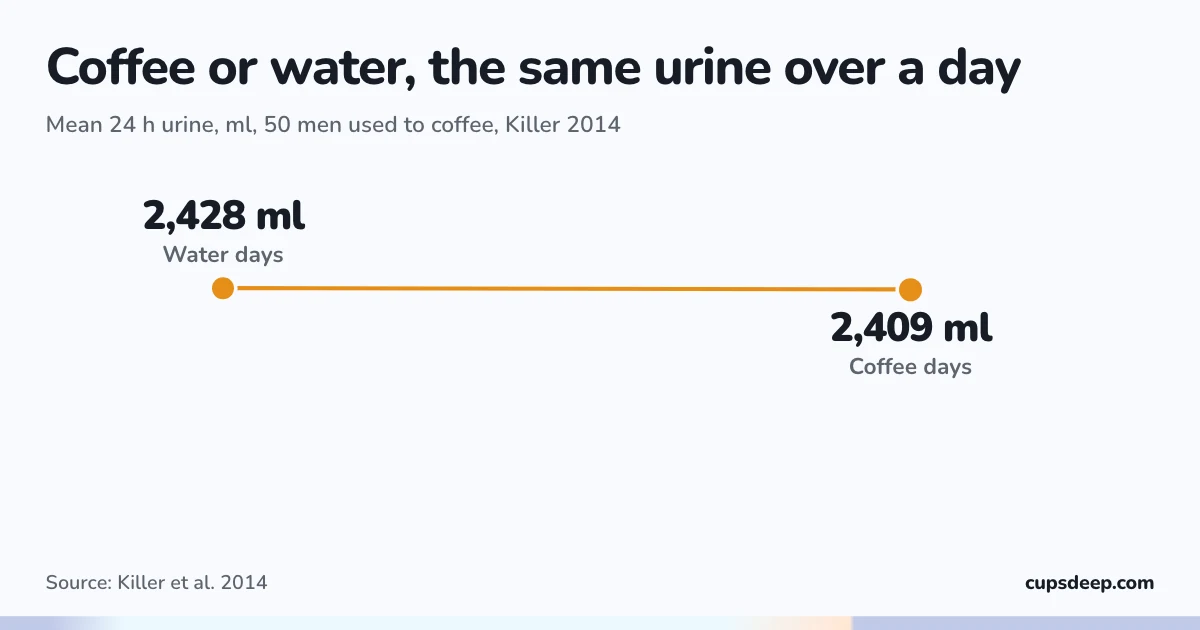
Dehydration, the other favorite, does not hold up. In a controlled trial of men who drank coffee daily, moderate coffee hydrated them about as well as water. The rest of the evidence is in does coffee dehydrate you.
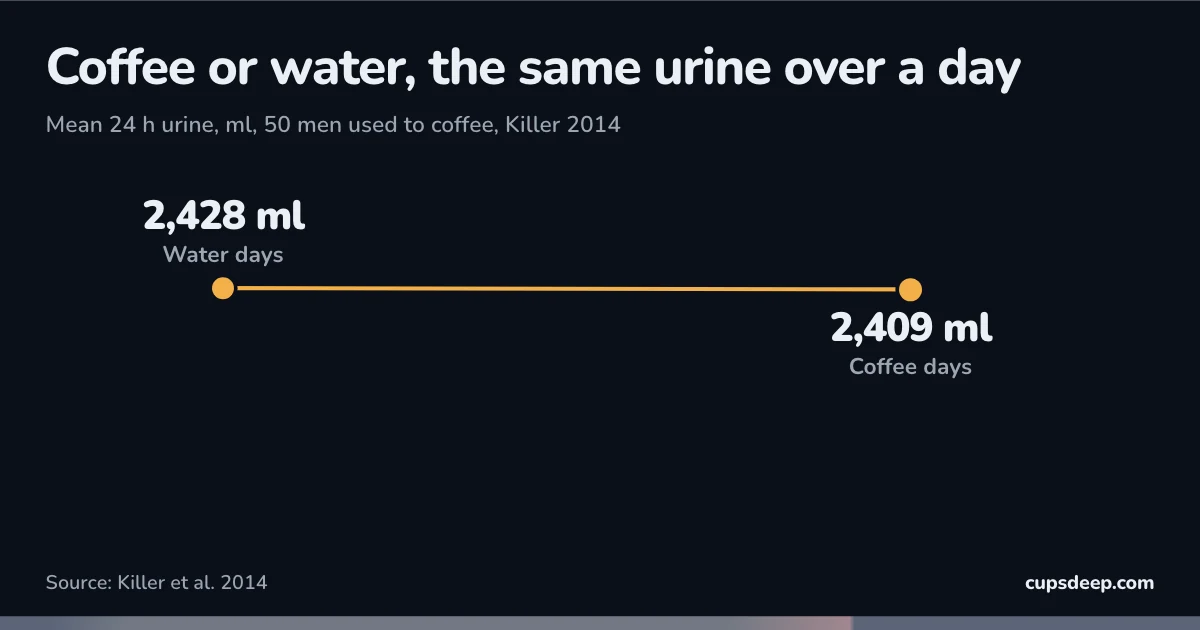
In a counterbalanced crossover trial by Killer, Blannin and Jeukendrup (2014), 50 men who habitually drank 3 to 6 cups of coffee a day spent three days drinking four 200 ml mugs of black coffee a day, at 4 mg of caffeine per kg of body weight, and three days drinking four mugs of water instead, with food and activity controlled. Caffeine averaged 308 mg a day (204.4 to 453). 24 h urine volume, measured on the first two days of each trial, did not differ: 2,409 ml on coffee against 2,428 ml on water. Total body water, measured with deuterium oxide, did not differ either (51.5 against 51.4 kg); the paper’s Figure 2, which shows it, gives n = 25 without saying why. Urinary sodium was higher on coffee, and body mass fell a little on both trials. The authors conclude that coffee, in moderation, gives caffeine-habituated men similar hydrating qualities to water. The Institute for Scientific Information on Coffee (ISIC) funded the study, and the paper describes ISIC as “a non-profit organisation, devoted to the study and disclosure of science related to coffee and health” and says the funders had no role in study design, data collection and analysis, decision to publish, or preparation of the manuscript. One author, Jeukendrup, declared that he is employed by PepsiCo. 608
Can caffeine late in the day make you more tired the next day?
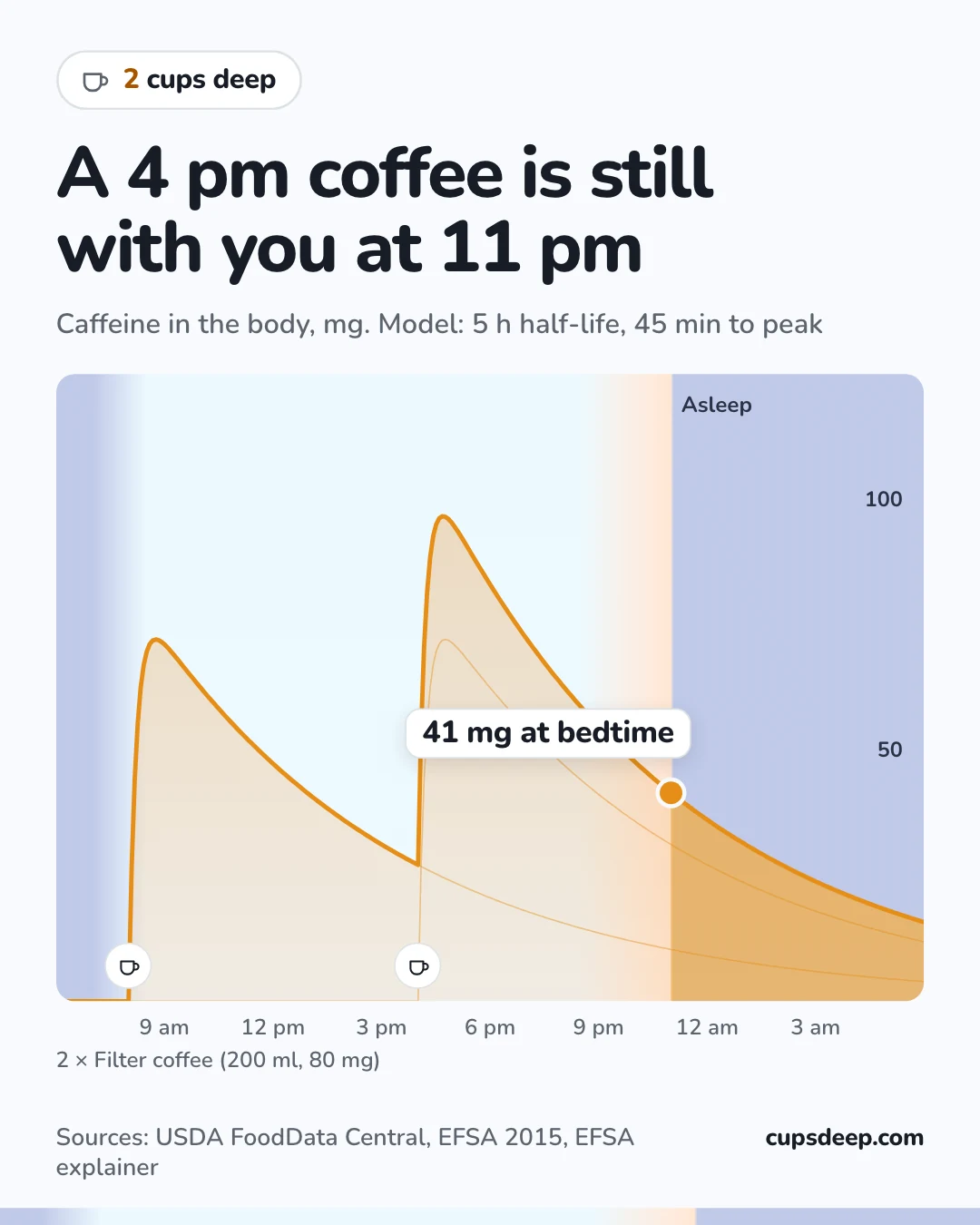
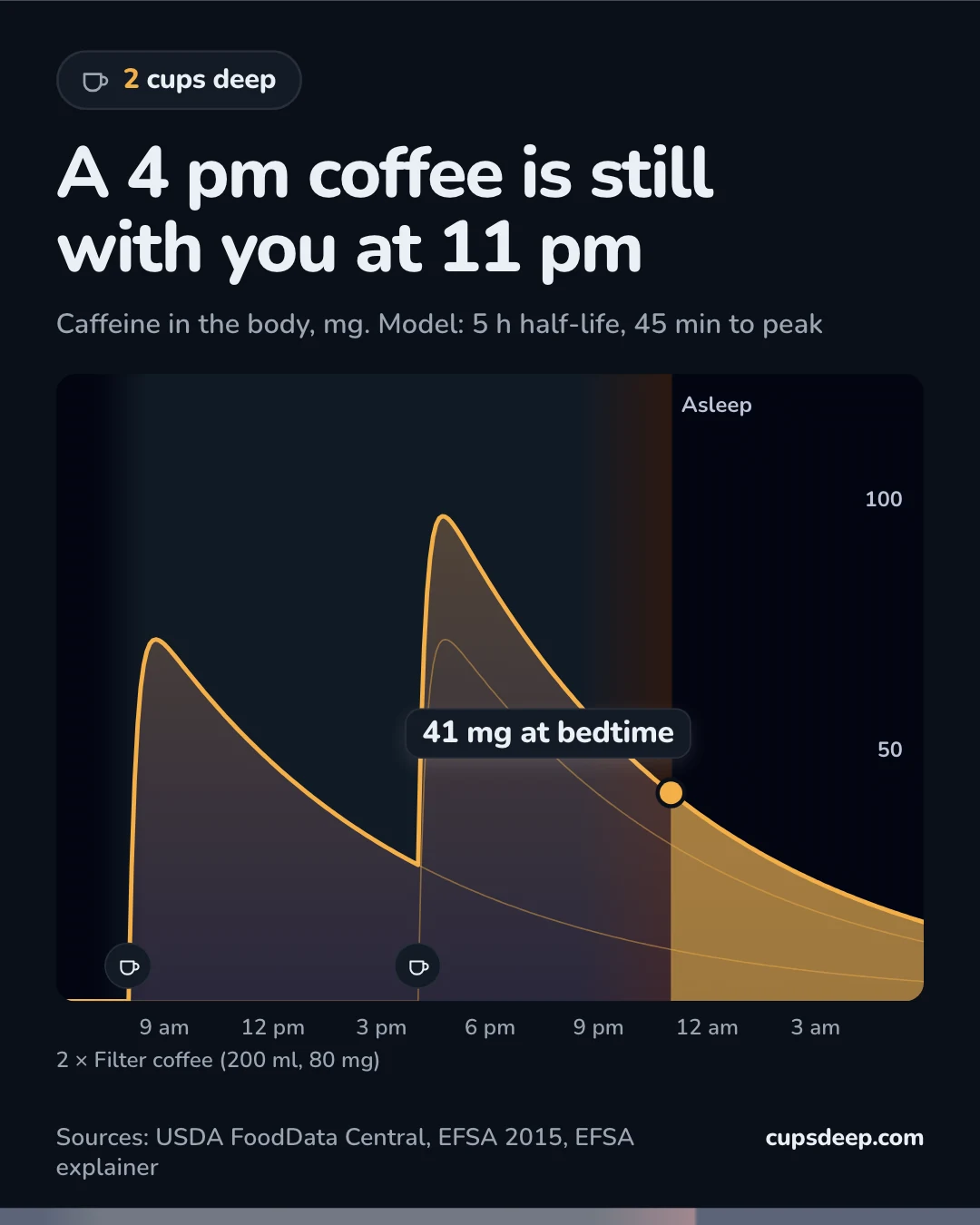
This is the loop none of the page-one articles we read draws. Caffeine late in the day costs sleep; less sleep means more sleep pressure the next day; and the obvious fix is more caffeine. The first two links have evidence behind them. The chain is ours: no single study we found followed it from one day to the next.
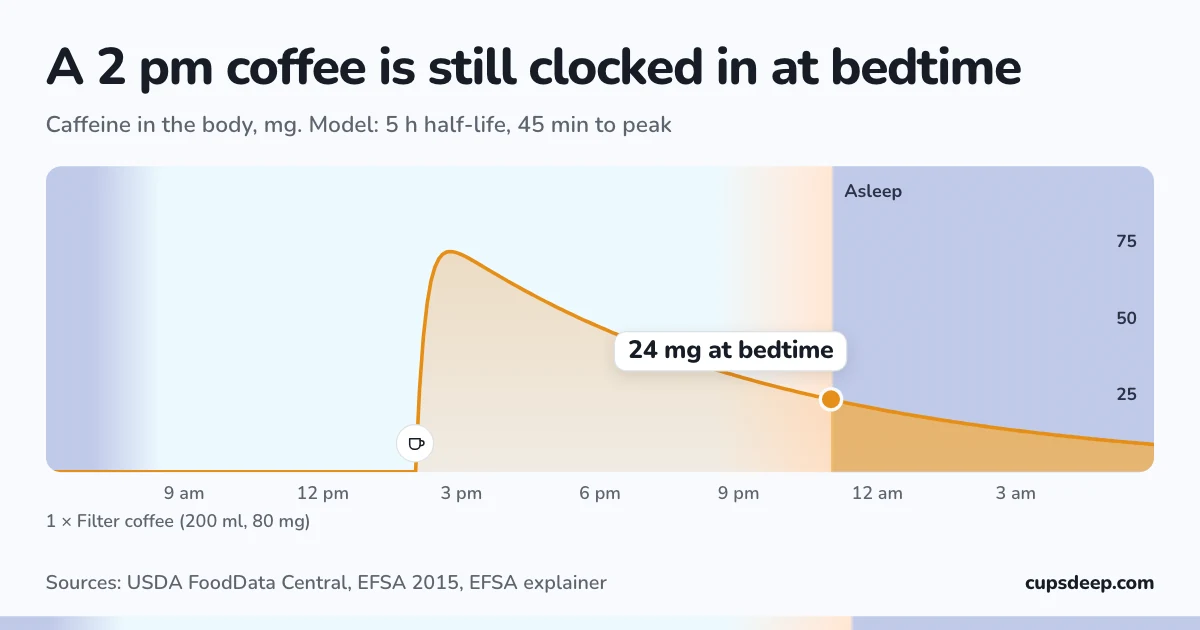
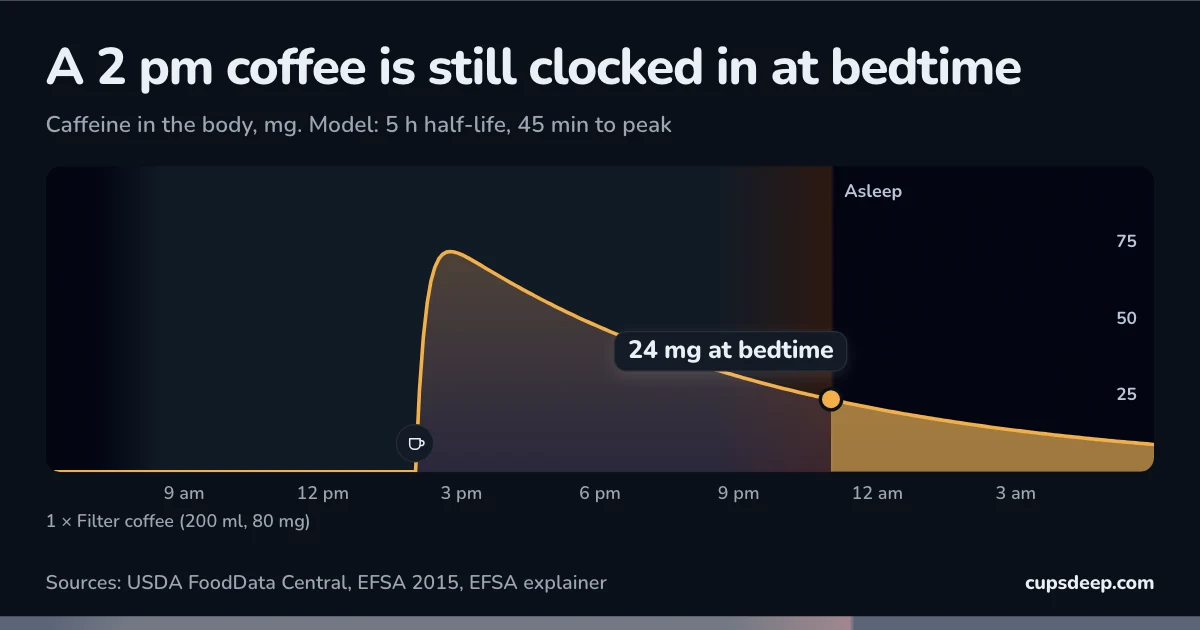
In Drake et al. 2013, 12 healthy normal sleepers took 400 mg of caffeine as a pill at bedtime, 3 hours before or 6 hours before their usual bedtime, or placebo, on separate nights at home, and sleep was disturbed versus placebo at each time. On a home sleep monitor, total sleep fell significantly, by 1.1 to 1.2 hours versus placebo, at each time, and the discussion says that even at 6 hours caffeine reduced sleep by more than 1 hour. In the sleep diaries (Table 2), the 6-hour dose cut self-reported total sleep by 41 minutes, a result that only approached significance (p = 0.08). The study was small and used a single-channel EEG headband, not polysomnography. 2526
A 2023 meta-analysis found that caffeine was associated with 45.3 minutes less total sleep than the control condition (95% CI 29.0 to 61.5), sleep efficiency lower by 7%, 9.1 minutes longer to fall asleep and 11.8 more minutes awake during the night. These are pooled across every dose and timing in the studies, not the cost of one cup. 172
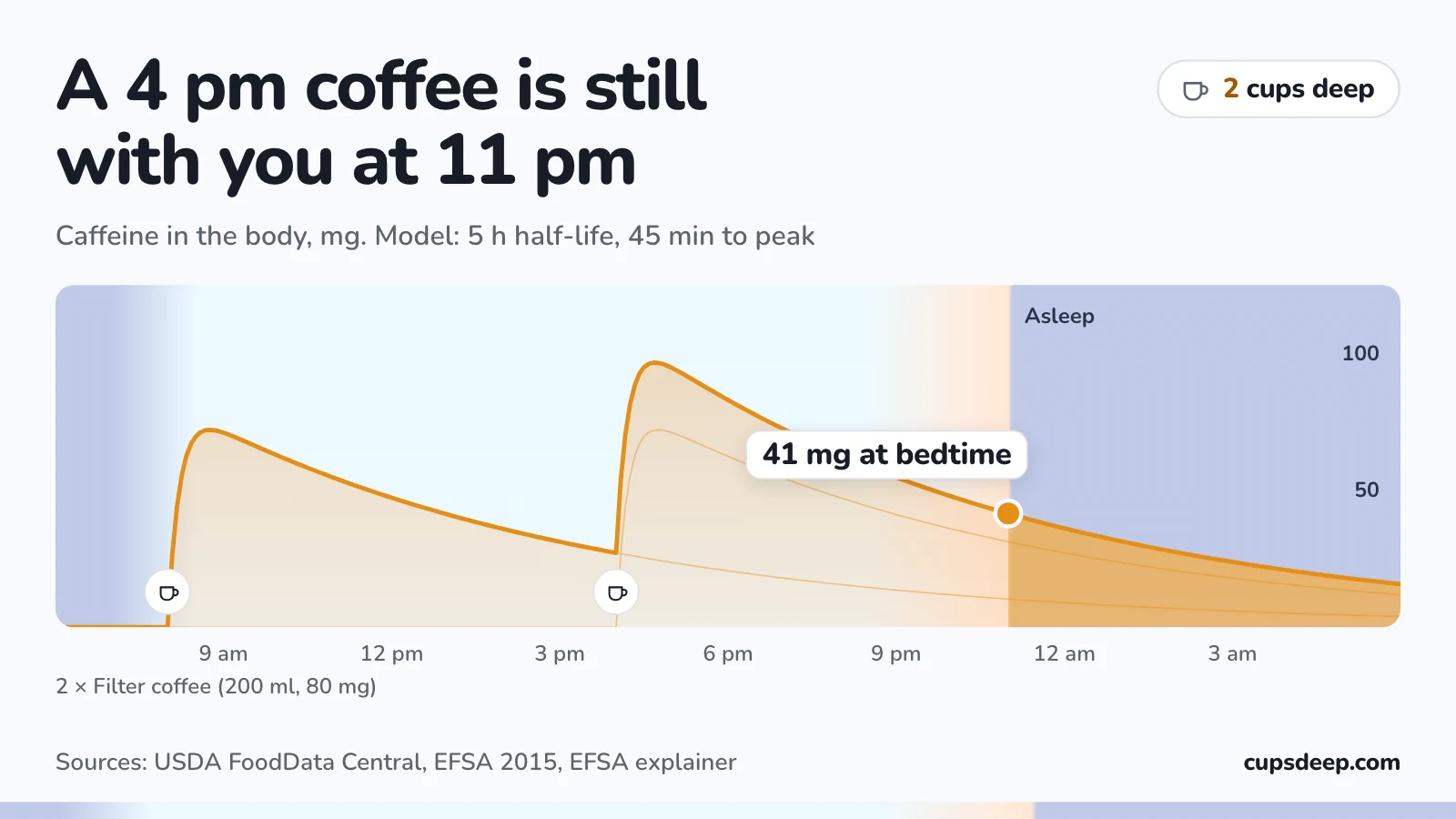
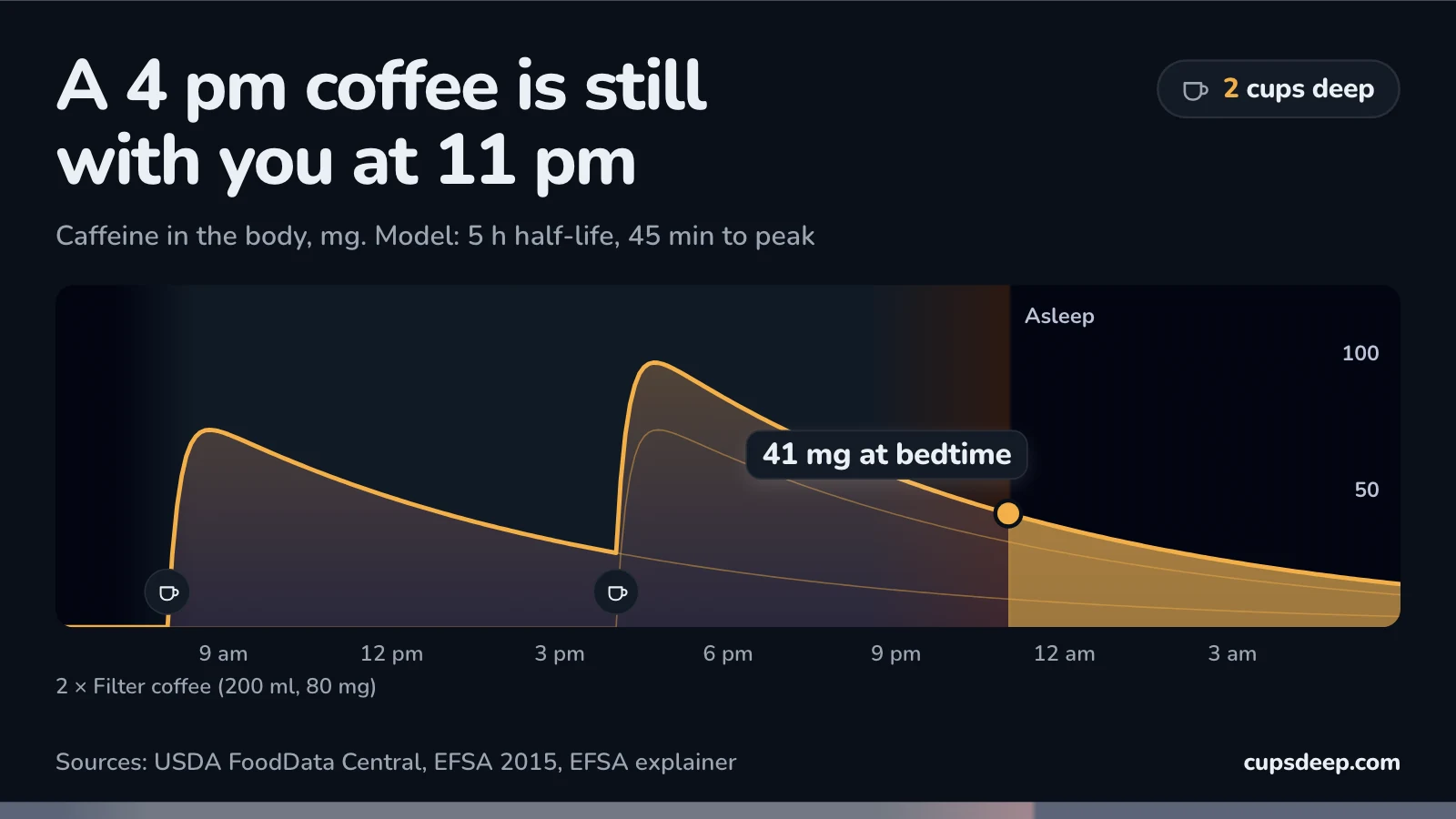
The same meta-analysis modeled how early a dose must be taken to avoid a reduction in total sleep time: at least 8.8 hours before bedtime for a cup of coffee (taken as 107 mg per 250 mL) and at least 13.2 hours for a standard serve of pre-workout supplement (217.5 mg); it found no cut-off for a cup of black tea (47 mg per 250 mL). The cut-off is a statistical line, the first time at which the 95% confidence interval of the effect no longer crossed zero for that dose, so “no cut-off” means the model could not show a loss at that dose, not that the dose was shown to be harmless. The drink contents are the paper’s assumed typical values, and the authors call the times a starting point to adjust from. 172
Even a morning dose can reach the night. In one small study, 200 mg at breakfast still cut total sleep, with about 18% of the peak caffeine level left in saliva at bedtime. And a night without sleep is when adenosine receptor binding was seen to rise in the human PET study above.
How do you avoid a caffeine crash?
We can only tell you what the studies imply, not what your doctor would say. If the crash is withdrawal, the next dose ends it: caffeine reverses withdrawal, usually within 30–60 minutes. That is why the first coffee of the day feels like a cure. It is also why it is not one.
My first coffee isn’t a boost. It’s bail
- Keep the timing steady. Withdrawal starts 12–24 hours after the last caffeine, so a late first cup on a weekend is a small withdrawal experiment.
- Mind the last cup. The meta-analysis put the cut-off for a cup of coffee at 8.8 hours before bed. Why it takes that long, with a half-life of 4 hours on average, is in how long caffeine stays in your system.
- If you quit, expect a dip. Withdrawal is typically over in 2–9 days. The tapering evidence, and its limits, are in caffeine withdrawal symptoms.
- Know your dose. The drinks table has the caffeine in each drink, and a single shot of espresso is 63.6 mg.
And the uncomfortable conclusion of the trials: once the habit is set, the best case is breaking even every morning. We are not telling you to stop. We are telling you what the coffee is doing.
Questions people ask
How long does a caffeine crash last?
If the crash is withdrawal, it typically starts 12–24 hours after your last caffeine, is worst at 20–51 hours and is over in 2–9 days. Caffeine reverses it, usually within 30–60 minutes. We found no study measuring a separate crash after a single dose.
Why do I feel tired right after drinking coffee?
We found no study showing that caffeine makes people sleepier soon after a dose. Sugar is one candidate: a meta-analysis linked carbohydrate to more fatigue in the first half hour. Another is how much sleep you are short, which caffeine does not erase. And in regular users, caffeine restores alertness rather than adding to it.
Does adenosine build up while caffeine is blocking it?
Adenosine rises with time awake in animals: in cats it roughly doubled after 6 hours of enforced waking. But caffeine held only 5–44% of one receptor type in a human PET study, and we found no human study measuring adenosine surging when caffeine wears off.
Does coffee dehydrate you and make you tired?
In a controlled trial of 50 men who drank coffee daily, 2,409 ml of urine in a day on coffee against 2,428 ml on water: coffee in moderation hydrated them about as well as water. The details are in does coffee dehydrate you.
Can an energy drink make you more tired?
In one small study of 10 people short on sleep, a sugary energy drink with 30 mg of caffeine did not reduce sleepiness and left them with slower reactions about 80 minutes later. Cans with more caffeine were not tested.
Does caffeine tolerance go away?
In mice, the rise in brain adenosine receptors reversed within 7 days of stopping. In people, withdrawal symptoms are typically over in 2–9 days. One study found caffeine had no effect on alertness after a week off, which suggests the earlier alertness gain was withdrawal reversal, not a boost.
Sources
Every number above links to the place it came from. How the numbers are chosen and checked is on the method page; the drink table is at /drinks. Written with AI agents, as the whole site is. A model of a typical body, not advice for pregnancy, illness or medication.
- What is caffeine?
- Beverages, coffee, brewed, prepared with tap water
- Beverages, coffee, brewed, espresso, restaurant-prepared
- Scientific Opinion on the safety of caffeine
- EFSA explains risk assessment: Caffeine
- Caffeine Effects on Sleep Taken 0, 3, or 6 Hours before Going to Bed
- Late afternoon and early evening caffeine can disrupt sleep at night
- A critical review of caffeine withdrawal: empirical validation of symptoms and signs, incidence, severity, and associated features
- The effect of caffeine on subsequent sleep: A systematic review and meta-analysis
- Caffeine intake (200 mg) in the morning affects human sleep and EEG power spectra at night
- A critical review of caffeine withdrawal: empirical validation of symptoms and signs, incidence, severity, and associated features (full text)
- Withdrawal syndrome after the double-blind cessation of caffeine consumption
- No Evidence of Dehydration with Moderate Daily Coffee Intake: A Counterbalanced Cross-Over Study in a Free-Living Population
- Association of the anxiogenic and alerting effects of caffeine with ADORA2A and ADORA1 polymorphisms and habitual level of caffeine consumption
- Faster but not smarter: effects of caffeine and caffeine withdrawal on alertness and performance
- Effects of caffeine on performance and mood: withdrawal reversal is the most plausible explanation
- Caffeine-dependent changes of sleep-wake regulation: Evidence for adaptation after repeated intake
- Caffeine withdrawal: a contrast of withdrawal symptoms in normal subjects who have abstained from caffeine for 24 hours and for 7 days
- Caffeine occupancy of human cerebral A1 adenosine receptors: in vivo quantification with 18F-CPFPX and PET
- Sleep deprivation increases A1 adenosine receptor binding in the human brain: a positron emission tomography study
- Adenosine: a mediator of the sleep-inducing effects of prolonged wakefulness
- Effects of chronic caffeine on adenosine, dopamine and acetylcholine systems in mice
- Caffeine alters A2A adenosine receptors and their function in human platelets
- Dose and time effects of caffeine intake on human platelet adenosine A(2A) receptors: functional and biochemical aspects
- Sugar rush or sugar crash? A meta-analysis of carbohydrate effects on mood
- A high sugar content, low caffeine drink does not alleviate sleepiness but may worsen it
Keep reading
Body and sleep
Caffeine withdrawal: symptoms and timeline
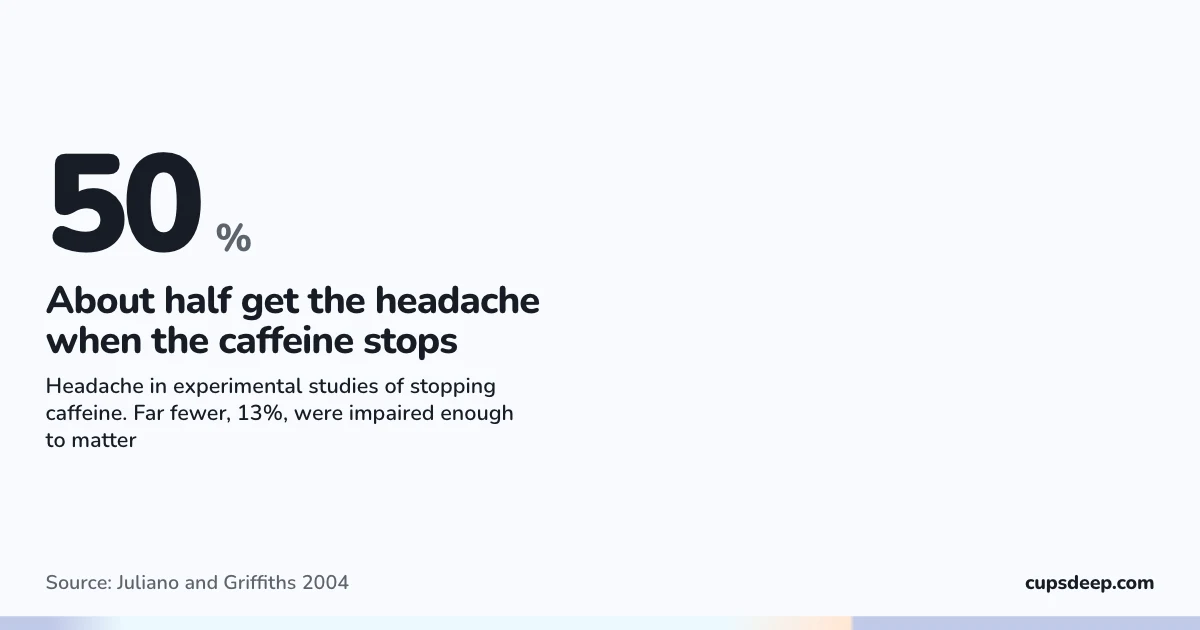
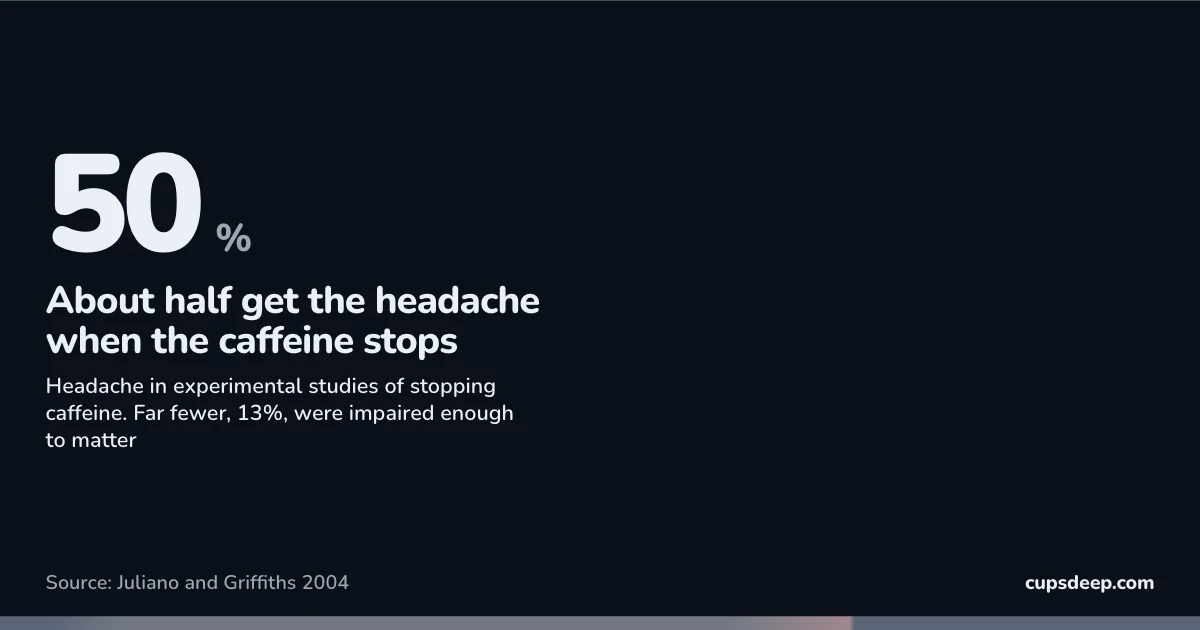
Caffeine withdrawal starts 12–24 hours after the last cup, peaks at 20–51 hours and lasts 2–9 days. About half get the headache. The odds and the fix.
Body and sleep
How long does caffeine stay in your system?
Half of a dose of caffeine is gone in about 4 hours, 2–8 hours between people. After five half-lives, 20 hours on average, 3.1% is left.
Body and sleep
Does coffee dehydrate you?
Not at everyday doses: men on four coffees a day passed the same urine as on water. Extra urine can follow 250–300 mg in one go, mainly in people off caffeine.